- AI for Ecommerce and Amazon Sellers
- Posts
- The One About Jobs
The One About Jobs
Some carefully crafted musings about the future of our jobs

Jo Lambadjieva
December 05, 2025

Don’t Miss This:

I'm delighted to be speaking at this year's ASW26 and I'd love to see you there!
Learn more and register here, with my 20% discount code included: https://invt.io/1ixbji269yl
The One About Jobs
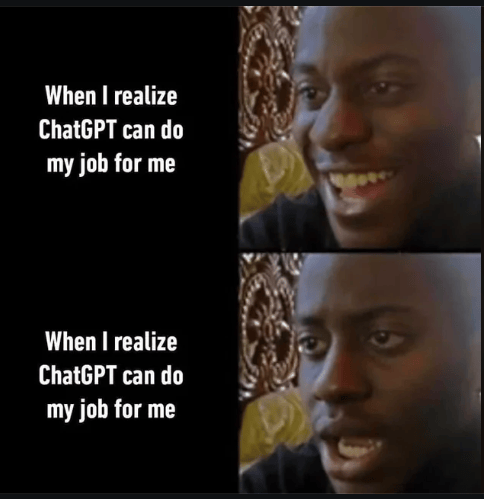
Okay, we need to have an uncomfortable conversation. And I mean really uncomfortable—the kind that makes you check your LinkedIn profile at 2 AM wondering if "proficient in ChatGPT" actually means anything anymore.
My DMs have been different lately. Not the usual "how do I optimize my Amazon listings with AI" questions, but deeper career anxiety stuff. Ecommerce professionals questioning their entire career path. Marketing managers with 15 years of experience wondering if any of it matters when Meta's AI can apparently do their job better. Agency owners watching long-term clients quietly test in-house AI solutions.
And here's the thing that's keeping me up at night (besides my usual doom-scrolling through AI research papers while eating leftover junk): most people think we have time to figure this out. Spoiler alert: we don't.
The "Oh Shit" Timeline Nobody Wants to Admit
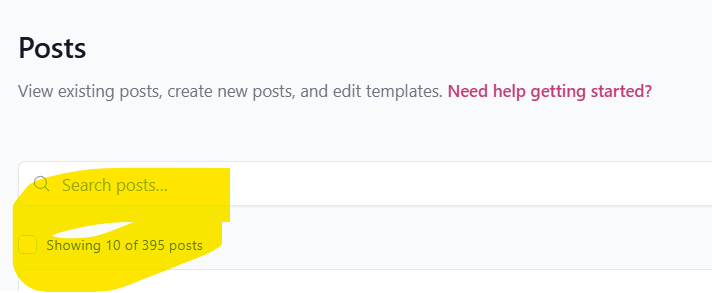
I kid you not…I’ve written a lot about AI.
I've been writing this newsletter three times a week for two and a half years now. That's roughly 390 editions of me documenting AI developments while simultaneously being fascinated and terrified. But what happened in 2025—this year alone—has made everything that came before look like a gentle warm-up.
Meta earlier in the year announced they're achieving full advertising automation by the end of 2026. Not 2030. Not "someday maybe." Twenty-six. As in, next year that starts it 26 days. They literally said brands will just upload a product image, connect their bank account, and Meta's AI will handle... everything. Creative, targeting, optimization, the whole enchilada.
Meanwhile, Amazon workers are signing open letters about AI deployment that read like dystopian fiction, Google's Performance Max is making media buyers question their existence, and I'm sitting here at 1 AM wondering if I should add "prompt engineering" to my LinkedIn skills or just embrace the void.
The Part Where I Get Uncomfortably Real About Your ChatGPT "Skills"
Here's something that makes me want to shake people (lovingly, with consent): the number of professionals who think they're "AI-ready" because they've used ChatGPT to write an email.
Listen, I love that you discovered you can make ChatGPT write your weekly reports. Truly, I do. But thinking that makes you AI-proficient is like thinking you understand aviation because you've been on a plane. There's a massive difference between using consumer AI tools and understanding how these systems are actively dismantling entire industries.
I sit in conference calls where people proudly announce they "already know AI" and then proceed to have zero understanding of how Meta's algorithms are making their entire job redundant. It's like watching someone confidently state they understand the internet because they can send a GIF.
The harsh truth? AI proficiency for professional survival means understanding how automation is restructuring your specific industry's value chain. It means recognizing which of your tasks AI handles better than you (spoiler: more than you think) and which require the messy, complicated, beautifully human judgment that machines still struggle with.
The Entry-Level Apocalypse That's Already Happening
SignalFire just dropped data that made me literally spit out my coffee (okay, it was wine, but that's between us): there's been a 50% decline in new role starts for people with less than one year of post-graduate experience. Fifty. Percent.
You know what this means? That traditional career ladder where you start in the mailroom and work your way to the C-suite? It's not just broken—it's being actively demolished while we watch. Entry-level positions aren't just disappearing; they're being vaporized.
I think about this constantly. Where do people learn the basics now? How do you develop intuition about customer behavior if you never worked a support desk? How do you understand brand voice if you never wrote terrible copy that got rejected seventeen times?
Universities are scrambling to partner with OpenAI and Anthropic, which is great for future graduates but does absolutely nothing for the mid-career professional who's suddenly realizing their skillset has the shelf life of gas station sushi.
Why Big Tech Wants You Gone (It's Not Personal, It's Just Math)
Let me break down the economics here because it's both brilliant and terrifying:
Meta makes money from advertising. Lots of it. Like, "buying small countries" amounts of money. Every layer between them and advertisers' wallets is friction. Agencies? Friction. Media buyers? Friction. That guy who insists on manual bid adjustments? Maximum friction.
Their AI doesn't need coffee breaks, doesn't ask for raises, and definitely doesn't spend three hours debating whether the CTA button should be blue or slightly more blue. It just optimizes, iterates, and prints money.
Google's doing the same thing with Performance Max. Amazon's automating everything that moves. These platforms have both the means and the motivation to eliminate human intermediaries, and they're not being subtle about it.
Omnicom just bought Interpublic Group—that's going to eliminate 4,000+ jobs and entire agency brands that have been around since Mad Men was actually happening, not just a TV show. Here's the thing: they're not just consolidating to cut costs. They're preparing for a world where AI handles most of the work that used to require entire departments. Why keep two creative teams when AI can generate thousands of variations? Why maintain separate media buying units when algorithms handle optimization? The math is brutal—one AI system plus a few strategic humans can do what used to take hundreds of people.
The Creative Mediocrity Tsunami
Here's something that genuinely makes my brain hurt: By mid-2025, nearly half the images on Adobe Stock are AI-generated. Amazon had to limit Kindle authors to publishing three books per day. PER DAY. Because apparently, that's a limit we need now.
We're drowning in an ocean of "good enough" content. Not great. Not terrible. Just... there. Like elevator music for your eyeballs.
But here's the kicker: platforms don't care if the content is mediocre. They care if it converts. And increasingly, mediocre AI content converts just fine for most use cases. Your carefully crafted, emotionally resonant, award-worthy creative? It might perform 5% better. But it costs 500% more.
The Part Where Governments Are Basically Useless
You want to know what's truly insane? Our governments are acting like this is still 2019 and AI is that cute thing that recommends Netflix shows.
While we're experiencing the fastest technological disruption in human history, politicians are having hearings about whether ChatGPT should be allowed to write homework. Meanwhile, entire career categories are evaporating faster than my will to cook dinner after reading AI research papers.
There's no coherent strategy. No preparation. No "hey, maybe we should tell people that everything they know about careers is about to become irrelevant." Just vague promises about "reskilling" and "adaptation" that sound like they were written by—you guessed it—AI.
Young people entering the workforce right now? They're basically walking into a burning building while everyone pretends it's fine. The traditional career advice they're getting assumes pathways that won't exist by the time they need them.
Side note: if you want an AI CEO that doesn’t just sell you a pipe dream because it’s comfortable, read what Dario Amodei, CEO of Anthropic has been talking about for a while now.
What You Actually Need to Do
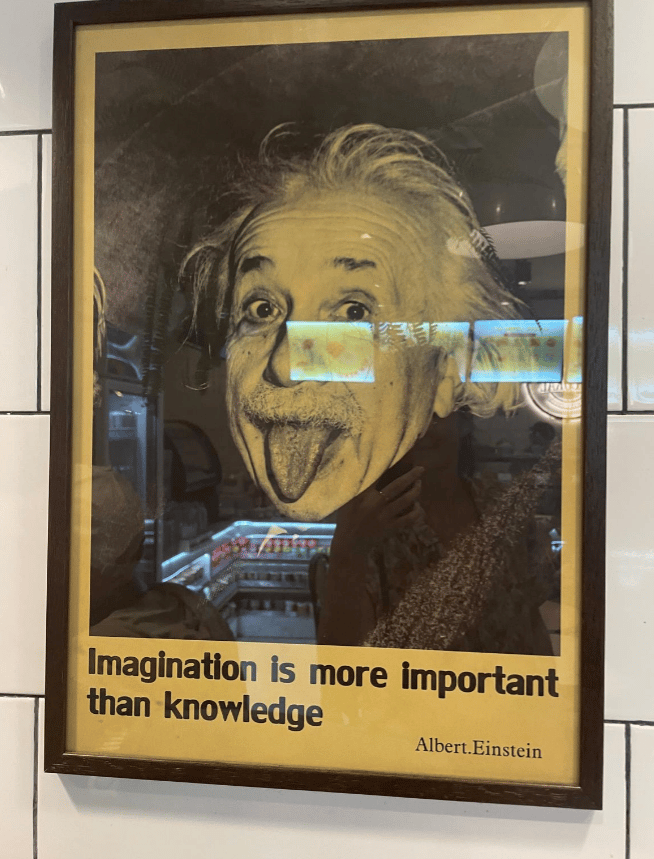
One thing AI still can’t crack. Inspo image taken at the random Pad Thai place at Phuket Airport today while finishing this article.
First, stop pretending this isn't happening. I see so many people in deep denial, like if they just ignore AI hard enough, their job will magically become automation-proof. That's not how this works.
Second, develop actual AI literacy. Not "I can make ChatGPT tell jokes" literacy. I mean understanding how these systems work, what they're good at, what they suck at, and most importantly, how they're being deployed in your specific industry to replace human workers.
Third, focus ruthlessly on what remains human. Strategic thinking that requires understanding context AI can't grasp. Relationship building that goes beyond transactional interactions. Creative vision that transcends pattern matching. The messy, complicated, beautifully imperfect stuff that makes us human.
Fourth, and this is crucial: stay informed and adaptable. I write this newsletter three times a week, and I can barely keep up with the pace of change. If you're checking in on AI developments quarterly, you're already obsolete.
The Uncomfortable Bottom Line
Look, I'm not trying to be all doom and gloom here. Generally, I am a pretty positive person. But after two and a half years of tracking this stuff obsessively, after dozens of conversations with people whose careers are evaporating, after watching the acceleration of 2025 alone—I can't pretend this is fine.
The disruption isn't coming. It's here. Right now. While you're reading this, someone's job is being automated. Maybe yours.
Part of my mission with this newsletter has always been sharing knowledge to help people become AI proficient and not get replaced. I put out free content constantly because I genuinely believe AI empowerment should be universal—the technology is amazing in terms of possibilities, but I deeply disagree with this race to replace as many humans as possible with algorithms.
But knowledge without action is just anxiety fuel. And trust me, I have enough anxiety fuel to power a small city.
The platforms we depend on are actively working to eliminate their dependence on us. The skills that defined professional value last decade are becoming quaint historical artifacts. The career ladder isn't just broken—it's being fed into a wood chipper while we debate whether AI can truly be creative.
So yeah, we need to prepare ourselves, our families, our kids who are about to enter a job market that looks nothing like what we promised them. Not in five years. Not next year. Now.
Because the robots aren't coming for our jobs. They're already here, they've got great performance reviews, and they don't even eat the good snacks from the break room.
P.S Please respond to this email and give me your thoughts on the matter. I have this topic very close to heart and I would love to understand where everyone is and how they see what’s happening.
Do You Love The AI For Ecommerce Sellers Newsletter?
You can help us!
Spread the word to your colleagues or friends who you think would benefit from our weekly insights 🙂 Simply forward this issue.
In addition, we are open to sponsorships. We have more than 59,000 subscribers with 75% of our readers based in the US. To get our rate card and more info, email us at [email protected]
The Quick Read:
Crocs turned quirky clogs into a $4.1B brand by leaning into bold identity, local social feeds and smart creator collabs.
The AI boom looks huge, but spending, valuations and macro risk all rhyme with 1999, suggesting a bubble that could pop fast.
ChatGPT still wins on product feel, but Gemini is closing in with Nano Banana
Nano Banana Pro lets Gemini turn any YouTube link into a clean infographic in one prompt, giving you instant visual explainers.
ChatGPT Voice now lives inside chat so you can talk, see answers and visuals and scroll history in one continuous experience.
A simple ChatGPT schedule that emails daily idea lists turned one creator’s scattered thoughts into a calm, consistent content system.
Ecommerce blogs still matter when they deliver real value and AI friendly structure, driving both search traffic and AI citations.
The Genesis Mission is a US wide AI platform built to supercharge science, security and industry with shared models and datasets.
In 2025, voice agents are still close to human costs, so margins are thin until inference prices drop and use cases sharpen.
Amazon’s ad business grew from reluctant tests to a $56B powerhouse by embracing search ads, attribution and platform scale.
Reddit can kill or convert buyers, so brands need smart ads, owned subreddits and real conversations to tilt threads in their favor.
HP plans to cut up to 6,000 jobs while investing in AI, joining a broader trend of companies citing automation in tech layoffs.
AI models now act like influencers, forming opinions on brands and giving tailored recommendations that quietly steer buying decisions.
The Tools List:
🤖 Forefront - Your AI assistant for work
👤 Neiro AI: Generate video AI avatars with human-like features, micro-expressions, and emotions.
🩻 Mockey: Generate high-quality product mockups with 1000+ templates.
🦾 Browse AI - Train a robot in 2 minutes to extract and monitor data from any website
💻 Brainner - Streamline talent acquisition by automating AI-driven resume analysis
About The Writer:

Jo Lambadjieva is an entrepreneur and AI expert in the e-commerce industry. She is the founder and CEO of Amazing Wave, an agency specializing in AI-driven solutions for e-commerce businesses. With over 13 years of experience in digital marketing, agency work, and e-commerce, Joanna has established herself as a thought leader in integrating AI technologies for business growth.
For Team and Agency AI training book an intro call here.