- AI for Ecommerce and Amazon Sellers
- Posts
- The Health AI Land Grab Is Here
The Health AI Land Grab Is Here
And Your Supplement Brand Is the Prize

Jo Lambadjieva
March 25, 2026
Sponsored by


From Our Sponsor:
How Jennifer Aniston’s LolaVie brand grew sales 40% with CTV ads

The DTC beauty category is crowded. To break through, Jennifer Aniston’s brand LolaVie, worked with Roku Ads Manager to easily set up, test, and optimize CTV ad creatives. The campaign helped drive a big lift in sales and customer growth, helping LolaVie break through in the crowded beauty category.
The Health AI Land Grab Is Here — And Your Supplement Brand Is the Prize
Source: Amazon
Four of the biggest AI platforms just launched dedicated health products within weeks of each other. OpenAI rolled out ChatGPT Health. Microsoft unveiled Copilot Health. Perplexity dropped Perplexity Health. And Amazon — never one to let a perfectly good land grab happen without them — expanded its Health AI assistant from the One Medical app onto its main website and app, available to anyone. Not just Prime members. Not just One Medical subscribers. Anyone with a pulse. (Which, given that it's a health tool, feels like a reasonable minimum requirement.)
On the surface, this looks like a healthcare story. It is not. Or rather, it's not only a healthcare story. For anyone selling supplements, wellness products, fitness gear, personal care, or anything adjacent to the general concept of "not feeling terrible" — this is a discovery story, a distribution story, and quite possibly the next chapter in the ongoing saga of platforms deciding they'd like to control everything, please and thank you.
Why Every AI Platform Suddenly Wants to Be Your Doctor (Sort Of)
The commercial logic here is almost embarrassingly transparent. Health and wellness queries are some of the highest-intent, highest-frequency interactions consumers have with search and AI tools. OpenAI says over 230 million people globally ask health questions on ChatGPT every week. Microsoft claims its consumer products handle more than 50 million health questions daily. These aren't people casually browsing. These are people actively deciding what to buy, what to take, and whether that weird pain in their shoulder is a muscle thing or a "call someone immediately" thing.
Every AI company has done the same maths: the platform that earns a consumer's trust on health questions earns proximity to some of the most valuable purchase decisions in consumer spending. The US wellness market alone sits at over $480 billion. Supplements, fitness equipment, wearables, nutrition products, personal care — categories where the distance between "I have a question" and "I need to buy something" is approximately three seconds and one moment of mild panic.
That's why they're all piling in at once. Not because the technology suddenly made it possible (AI models have been answering health questions for a while now, with varying degrees of accuracy and existential dread). But because the platforms have collectively realised that health is the wedge into persistent, personalised consumer relationships. And persistent, personalised consumer relationships are where the money lives. Always has been. The platforms just needed a sufficiently intimate data category to crack the door open.
The Playbook Is Identical (And That Should Tell You Something)
Here's what's interesting: all four platforms are building essentially the same thing, using the same architecture, arriving at the same destination from four different starting points. It's like watching four people independently invent the wheel, except the wheel is "own the customer's entire health profile and then sell them things."
Step one: connect to personal health data. Medical records, lab results, wearable data from Apple Health, Fitbit, Oura, Withings. Perplexity launched with connectors for electronic health records from over 1.7 million care providers. Microsoft's Copilot Health integrates with over 50,000 US hospitals. ChatGPT Health partners with b.well for medical records access. Amazon pulls data through the Health Information Exchange. (Nothing says "casual Tuesday" like handing your complete medical history to the company that also recommends you buy a 48-pack of paper towels.)
Step two: layer AI interpretation on top. Not just retrieving information — synthesising it. Connecting a sleep pattern with a blood marker with a fitness trend and producing a coherent narrative the user can act on.
Step three — and this is the part that should have every ecommerce seller's attention — connect those insights to transactions. Perplexity Health generates personalised nutrition plans and training protocols. ChatGPT Health integrates with MyFitnessPal, Instacart, and Peloton, turning health insights into meal plans, shopping lists, and workout recommendations. Amazon's Health AI can connect users directly to providers, prescriptions, and — inevitably, inexorably — products.
Aggregate personal data. Generate personalised insight. Close the loop with a purchase. If you've watched how Amazon built its advertising business on purchase intent data, or how Google built search dominance on query data, this pattern should feel less like innovation and more like déjà vu with a stethoscope.
What This Does to Product Discovery (Spoiler: A Lot)
Consider a consumer who asks their AI health assistant: "My iron levels are low — what should I do?" In today's world, that query goes to Google. Returns a mix of SEO-optimised content, sponsored results, and organic listings. The consumer clicks through, reads, compares, opens seventeen tabs, closes twelve of them, and eventually lands on a product page — probably on Amazon. The seller's job in that world is to optimise listings, run PPC, build keyword relevance, and hope the algorithm is in a generous mood.
In the AI health paradigm, the answer arrives differently. The assistant already knows the consumer's lab results, their dietary preferences (via MyFitnessPal or Apple Health), their allergies, and their purchase history. It doesn't return ten blue links. It provides a specific recommendation — or a short list — grounded in that consumer's personal context. The product that gets recommended isn't necessarily the one with the best keyword ranking or the most aggressive ad spend. It's the one the model determines is most relevant to that individual's actual health profile.
This is the shift from search engine optimisation to something we might call health context relevance. And the infrastructure being built right now — the connectors, the data integrations, the action layers — will determine which products get surfaced and which get quietly buried in a way that makes page two of Google results look like prime real estate by comparison.
Amazon's Position Is... Well, It's Very Amazon
Among the four platforms, Amazon occupies a unique spot because it already controls both the health AI interface and the largest product marketplace. When Amazon's Health AI tells a consumer their vitamin D levels are low and suggests supplementation, the path from recommendation to purchase is a single step. Same platform. No redirect, no affiliate link, no intermediary. Just the frictionless glide from "you might be deficient" to "added to cart" that Amazon has been perfecting since it figured out one-click ordering.
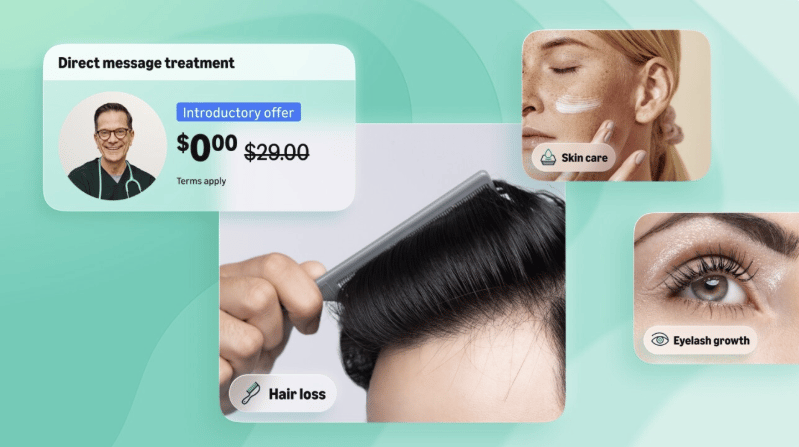
Amazon acquired One Medical for $3.9 billion in 2023, and Health AI was initially confined to that app. Expanding it to the main Amazon website and app is a significant escalation. Amazon is embedding health AI directly into the shopping experience, available to any user — not gated behind a subscription. The company is essentially building a funnel where health queries flow seamlessly into product purchases, with Amazon controlling both ends. (If you're wondering what vertical integration looks like when it puts on a lab coat, this is it.)
For marketplace sellers, this creates a familiar tension. The opportunity: if Health AI recommends your product, you gain access to an extraordinarily high-intent customer at the exact moment of decision. The risk: if the AI doesn't surface your product — because the data signals don't favour it, because the model prefers a different brand, because Amazon's own private-label product conveniently scores higher on whatever opaque criteria the system uses — you become invisible. And not the "I can improve my ranking" kind of invisible. The "I didn't even know there was a race" kind.
The Data Moat Nobody's Talking About Enough
Here's what makes this race particularly consequential. Every platform is asking consumers to hand over their most personal information — medical records, lab results, biometric data, prescription histories. And every platform is promising, in strikingly similar language, that this data will be encrypted, siloed, and never used for model training.
But the value of this data isn't in training models. It's in personalisation at the point of recommendation. A platform that knows your cholesterol is elevated, your sleep is disrupted, and you've been tracking macros doesn't need to train a model on your data to recommend a specific omega-3 supplement, a magnesium product, or a sleep-tracking device. It just needs to match your profile against its product catalogue in real time.
This is a fundamentally different competitive dynamic than anything ecommerce has dealt with before. Traditional advertising targets demographics and behaviours. Health AI targets physiology. The platform that accumulates the most personal health data — and builds the most seamless path from insight to purchase — gains a structural advantage in health and wellness commerce that is extraordinarily difficult to replicate. Demographics change. Purchase behaviours shift. Your blood work is your blood work.
What Sellers Should Be Thinking About (Right Now, Not Eventually)
It's early. The products are still rolling out, mostly in the US, mostly to early adopters. But the architecture is being laid, and the time to start paying attention was about three paragraphs ago.
First: health and wellness product discovery is migrating from keyword search toward contextual, AI-mediated recommendation. This doesn't make SEO and PPC irrelevant overnight, but the next layer of competitive advantage will come from how well a product's attributes, evidence base, and data signals align with what AI health assistants look for when making recommendations. If your product data reads like it was written for a search crawler in 2019, that's a problem with an expiry date on it.
Second: pay close attention to which connectors and integrations each platform prioritises. ChatGPT Health's integration with Instacart means meal plan recommendations flow directly into grocery orders. Amazon's embedding of Health AI into its main shopping experience has implications for every wellness category on the marketplace. These integrations aren't technical footnotes. They're the plumbing that determines where purchase intent actually flows.
Third — and this is the bit that extends well beyond supplements and protein powders — the health AI race isn't really about health. It's about building the most personalised, highest-trust consumer relationship in digital commerce. Health just happens to be the domain where the data is most personal, the questions most urgent, and the willingness to trust an AI assistant is (counterintuitively) highest. The platforms that win in health AI will carry that trust and that data advantage into every adjacent category. Today it's recommending your iron supplement. Tomorrow it's recommending your running shoes, your mattress, your groceries.
The Bottom Line
The lesson of the last decade was that whoever controlled the search box controlled product discovery. The lesson of the next decade may be that whoever controls the health profile controls the purchase decision.
Four platforms are now racing to be the one your customers trust with their blood work, their sleep data, and their medical records. If that doesn't strike you as relevant to your product strategy, I'd respectfully suggest it will — probably sooner than any of us are comfortable with.
P.S. — The fact that we've reached a point where "Amazon knows your cholesterol levels" is a legitimate competitive advantage and not a dystopian novel premise is... something. I'm choosing not to examine how I feel about it too closely. Healthier that way.
P.P.S. — Yes, I appreciate the irony of using the word "healthier" in a newsletter about AI platforms monetising the concept of health. We contain multitudes.
Do You Love The AI For Ecommerce Sellers Newsletter?
You can help us!
Spread the word to your colleagues or friends who you think would benefit from our weekly insights 🙂 Simply forward this issue.
In addition, we are open to sponsorships. We have more than 66,000 subscribers with 75% of our readers based in the US. To get our rate card and more info, email us at [email protected]
The Quick Read:
Karpathy scored 342 US jobs for AI exposure and the pattern is brutal: screen-based roles look vulnerable, physical trades look safer, and the average disruption score lands at 5.3/10.
Amazon is becoming an AI shopping layer for the wider web, letting users discover off-Amazon products and even have Amazon buy them via agentic checkout.
Okara’s new AI CMO runs growth agents across SEO, social, and communities, turning what used to be a full marketing team into a $99/month product.
Manus has moved onto the desktop, giving its AI agent access to local files, apps, and compute so it can automate real work directly on your machine.
ChatGPT ads make one thing clear: if your brand is not already winning organically in AI answers, paid placement will not save you.
ChatGPT visibility is not about ranking first but showing up often, with YouTube, web mentions, and Reddit shaping which brands make the cut.
Ad holding companies are rebranding for the AI era, shifting toward integrated, platform-led models that sell tools and systems, not just talent.
The Tools List:
🤖 Agent Gold: Auto-create new content for social networks or email based on your own voice.
🎨 Soona - AI-powered creative tools for e-commerce and UGC.
⌨️ Quicky AI - Use AI on any website instantly just by selecting text
⚙️ Gumloop - Automate any workflow with AI.
🌐 Browser Use - We enable AI to control your browser.
🗒️ Doclime - Get answers from your documents
About The Writer:

Jo Lambadjieva is an entrepreneur and AI expert in the e-commerce industry. She is the founder and CEO of Amazing Wave, an agency specializing in AI-driven solutions for e-commerce businesses. With over 13 years of experience in digital marketing, agency work, and e-commerce, Joanna has established herself as a thought leader in integrating AI technologies for business growth.
For Team and Agency AI training book an intro call here.