- AI for Ecommerce and Amazon Sellers
- Posts
- SOP: How to Create Brand Content That Isn't AI Slop
SOP: How to Create Brand Content That Isn't AI Slop
A full guide inside

Jo Lambadjieva
March 17, 2026

From Our Sponsor:
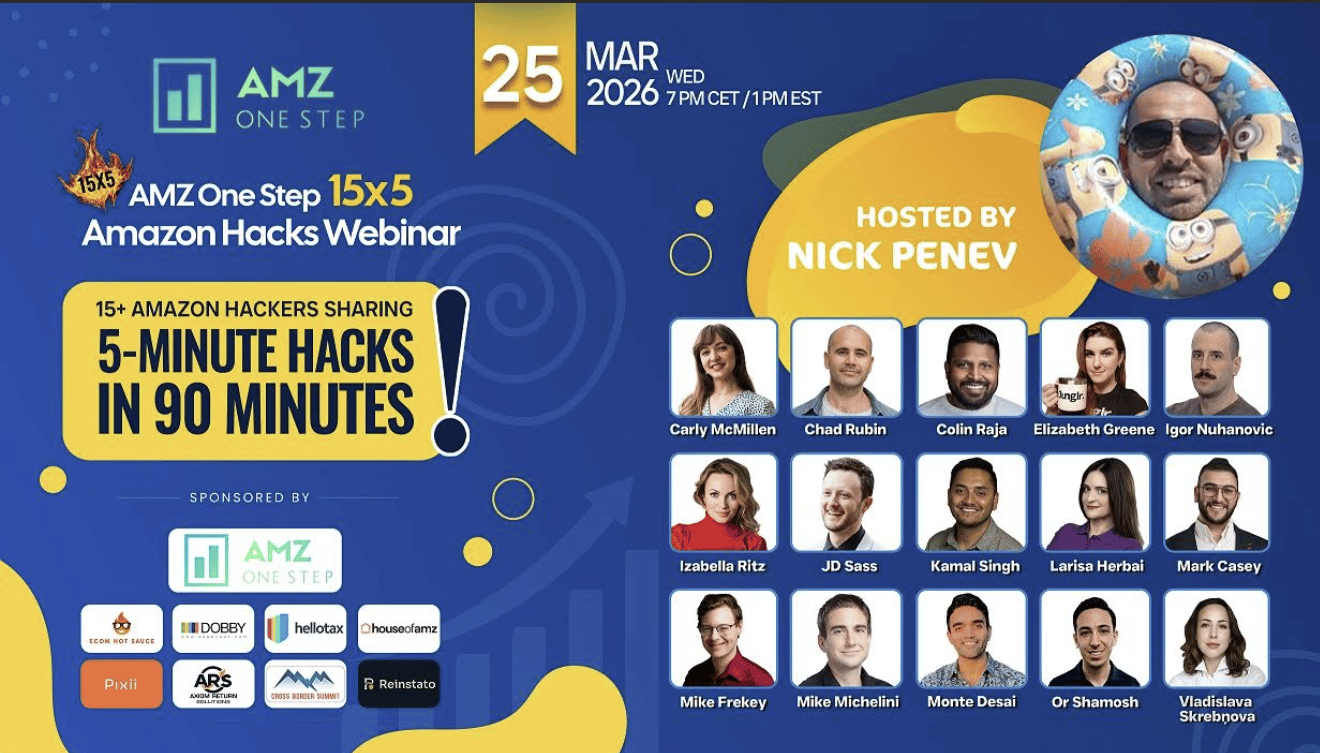
I’m inviting you to the AMZ One Step 15x5 Amazon Hacks Webinar on Wed Mar 25th 7 PM CET/1pm EST
It's an all-out hack-off to see WHO brings the baddest, boldest, brain-melting hacks.
Think: Amazon meets UFC… but with less punching and more profit.
Some of the topics covered: how to generate A+ Content in minutes using AI, why brands should stop waiting for permission to move faster with AI, how AI agents are transforming eCommerce workflows, how top brands are building lasting authority and credibility with AI, and even how entire PPC functions can be rethought and streamlined with AI.
SOP: How to Create Brand Content That Isn't AI Slop
WHY THIS MATTERS (Read This First)
AI slop isn't an output problem. It's an input problem.
Every ecommerce brand using AI to churn out product descriptions, category pages, and blog posts is feeding the same publicly available information back into the same models and expecting differentiated results. That's not a content strategy. That's a copy machine pointed at Google's top 10 results.
The brands winning on organic search AND in AI-generated answers (ChatGPT, Perplexity, Google AI Overviews, Amazon Rufus) share one thing: they're creating content that contains information no one else has. Proprietary data. Real customer language. Founder stories. Product development context. Category expertise that lives in their team's heads.
This SOP shows you how to extract that information systematically and turn it into content that performs — without sounding like it was written by a committee of robots.
THE THREE TESTS: Is Your Content AI Slop?
Before you publish anything, run it through these three questions. If you fail any one of them, it's slop.
Test 1: Does it contain information gain? Could someone have written this by reading the top 5 Google results? If yes — slop. Your content needs to add something that doesn't exist anywhere else. A proprietary stat. A real customer quote. An opinion your brand actually holds. A comparison your team has done internally.
Test 2: Does it sound like your brand? Read it aloud. Does it sound like your founder wrote it? Like your best social media post? Like the email your head of CX sends to unhappy customers? If it sounds like a press release from a company with no personality — slop. Ecommerce brands with strong voices (think: Gymshark early days, Oatly, Liquid Death) are winning because their content has a recognisable fingerprint. AI can replicate that fingerprint once you've defined it. It cannot create it.
Test 3: Is it actually readable? LLMs and humans both reward content that's easy to digest. If your product description uses "utilise" instead of "use," sounds like a legal brief, or has a subheading called "The Reality Check" — slop. Write at a level your actual customer reads at. For most ecommerce brands, that's casual, direct, and benefit-led.
PART 1: BUILD YOUR CONTENT FOUNDATION (Do This Once, Use Forever)
This is the work most brands skip. It's why their AI content is garbage.
1.1 Create Your Brand Voice Document
What it is: A one-pager that captures how your brand talks. Not a 40-page brand guidelines PDF nobody reads. One page.
How to build it:
Pull your 10 best-performing pieces of content — emails, product pages, social posts, whatever drove results or got shared
Drop them into Claude or ChatGPT with this prompt:
"Analyse these 10 pieces of content from our brand. Identify: our tone (3 adjectives), our sentence structure patterns, words we never use, words we always use, how we handle product benefits vs features, how we talk about our customer, and any signature phrases. Output this as a one-page voice guide."Edit the output. Add anything the AI missed. Remove anything that's wrong.
This document goes into every AI content workflow you run. Every single one.
Ecommerce-specific additions to include:
How you talk about price (do you apologise for premium pricing, or own it?)
How you talk about competitors (do you acknowledge them, ignore them, or attack them?)
How you handle sceptical customers (your category may have trust issues — supplements, skincare, pet food)
What claims you will and won't make
1.2 Build Your Product Context Library
What it is: A structured document containing everything important about each product that doesn't live on the product page.
Why it matters: AI content fails on product pages because the model only knows what's in your brief. Your product development team knows why certain ingredients were chosen over cheaper alternatives. Your CX team knows the question that comes in every single day. Your founder knows the story behind the formulation. None of that is in your brief.
What to capture per product:
The founding problem (why does this product exist?)
What you tried before landing on this formula/design/specification
The one thing about this product your competitors don't have
The most common customer objection and your real answer to it
The most common customer compliment (verbatim, from reviews)
What a customer gets wrong about how to use it
Any certifications, testing, or sourcing details that are genuinely differentiating
How to get this information:
Schedule 30-minute voice note sessions with your product team. Give them the questions above. Record on your phone. Transcribe with Whisper or Otter.ai. Feed into Claude to turn into structured context documents.
This takes half a day per product range. It transforms your AI content quality permanently.
1.3 Mine Your Customer Language
What it is: A swipe file of real customer language organised by theme.
Why it matters: Your customers do not describe your product the way your product team does. They describe the problem it solved, the moment they knew it was working, and the thing they tell their friends. That language is what Rufus, Perplexity and Google are looking for when they surface answers to real questions.
Where to get it:
Amazon reviews (yours AND competitors — especially 3-star reviews, which are the most honest)
Trustpilot and Google reviews
Your CX ticket system — pull the 20 most common enquiries
Gong or call recordings from your sales team (agencies: this is the richest source you're ignoring)
Reddit threads in your category
The questions section on your Amazon listing
How to organise it:
Feed it into Claude with this prompt:
"Here are [X] customer reviews and support tickets for [product category]. Group them into themes. For each theme, identify: the language customers use (not marketing language), the underlying fear or desire, and 3 verbatim phrases that best capture this theme."This output becomes a reference document that goes into every piece of content you create about that product.
PART 2: CONTENT PRODUCTION WORKFLOWS
2.1 Amazon Listing Optimisation (Rufus/Sparky-Ready)
The slop problem: Most AI-generated Amazon listings restate the product title in bullet points and stuff in keywords. Rufus doesn't reward keyword density. It rewards content that directly answers shopper questions.
The workflow:
Step 1 — Extract the questions Rufus will be asked Go to your Amazon listing. Look at the "Frequently asked questions" section, the "Customer questions" section, and competitor listings. List every question a shopper might ask. Also pull the top questions from your customer language library (1.3).
Step 2 — Map questions to content sections
Title → answers "what is this exactly?"
Bullet 1 → answers "what's the main benefit and who is it for?"
Bullets 2–5 → answer the next 4 most common shopper questions
A+ content → answers "why this brand?" and "what makes this different?"
Product description → provides the evidence and story behind the bullets
Step 3 — Write with context Paste in your product context document (1.2) and customer language file (1.3), then prompt:
"Using the customer language and product context provided, write an Amazon listing for [product]. Each bullet must directly answer a shopper question. Avoid marketing language. Write at a 7th grade reading level. Do not use the words: premium, high-quality, perfect, ultimate, innovative. The brand voice guide is: [paste 1.1]."
Step 4 — Human edit for voice The AI draft is 70% there. A human needs to check: does bullet 1 actually stop the scroll? Is the CTA in the A+ content doing work? Are there any claims that need substantiating?
2.2 SEO Blog Content / AEO Hub Pages
The slop problem: AI blog posts regurgitate what's already ranking. They have no point of view, no original data, and no reason to exist.
The anti-slop formula for ecommerce:
Every piece of long-form content needs at least one of these:
Original data — your own sales data, survey results, A/B test outcomes, or analysis of publicly available data with your interpretation
Expert perspective — your founder, your formulator, your head buyer, your lead designer, interviewed and quoted directly
Contrarian take — a commonly held belief in your category that your brand's experience contradicts
Customer story — a real customer outcome with specifics, not a vague testimonial
Workflow:
Identify the topic based on actual search queries and Rufus/AI overview gaps (use tools like Profound, Otterly.ai, Semrush)
Conduct a 20-minute interview with your internal subject matter expert. Record it.
Pull relevant customer language from your library
Brief Claude with: voice guide + product context + interview transcript + customer language + target query
Prompt:
"Write a [word count] article on [topic] for [brand]. Use the interview transcript to anchor the article in expert perspective. Open with a contrarian or surprising statement. Avoid regurgitating common advice — the reader already knows the basics. Every claim must be grounded in the context documents provided. Write in [brand voice]."
Human review: fact-check, add any context the AI missed, sharpen the opening hook
2.3 Category/Collection Pages
The slop problem: Category pages are usually a heading and 200 words of keyword-stuffed nothing because no one knows what to write there.
What a category page actually needs to do in 2025:
Answer "is this the right category for me?"
Surface for AI-generated answers to category-level questions
Give Rufus and Google enough context to understand what this collection is about
Workflow:
List every question a new shopper would ask when landing on this page (use customer language library)
Identify 3–5 differentiating things about how YOUR brand approaches this category
Brief Claude:
"Write a category page introduction for [collection name] at [brand]. The page must: answer the question '[most common shopper question]', differentiate us from [main competitor type] without naming them, and include our specific proof points: [list from product context]. Voice guide: [paste]. Keep it under 300 words. No fluff."
Do You Love The AI For Ecommerce Sellers Newsletter?
You can help us!
Spread the word to your colleagues or friends who you think would benefit from our weekly insights 🙂 Simply forward this issue.
In addition, we are open to sponsorships. We have more than 66,000 subscribers with 75% of our readers based in the US. To get our rate card and more info, email us at [email protected]
The Quick Read:
Anthropic’s clash with the Pentagon just turned explosive, with the DOD reportedly branding it a supply-chain risk after the company refused mass surveillance and fully autonomous weapons use.
This study cracks Google’s hidden citation fragments to reveal what AI actually quotes, showing short, structured, top-of-page sentences win far more often than traditional rankings suggest.
Anthropic is making switching easier with a fast context import tool, letting users bring over memory and preferences from another AI so Claude feels useful from chat one.
HookLens wants to go beyond ad analytics by dissecting creative frame by frame, scoring drop-off points, audio, persona fit and market relevance with fix suggestions in under a minute.
Claude for Excel and PowerPoint now shares context across open files and adds reusable skills, making cross-app analysis, deck building and spreadsheet work far more seamless.
Anthropic’s new Claude Marketplace lets enterprises spend existing commitments on partner-built Claude apps, betting buyers still want specialised software, just with Claude at the core.
Adobe is bringing its Photoshop AI assistant to web and mobile, while expanding Firefly with smarter edit tools that make pro-level image changes feel far more conversational.
Amazon just won a temporary injunction against Perplexity’s Comet browser, escalating the fight over AI shopping agents, scraping rights and who gets to control ecommerce access.
Perplexity’s new Personal Computer promises an always-on AI worker running through a connected Mac mini, blending local apps with remote control for a 24/7 personal operator.
The Tools List:
✍️ Recap - Turns learning materials into insightful visuals like mind maps and timelines for better understanding.
📊 GetWebsite Report - AI Agent to audit your website for SEO & Conversion.
🌐 Wonderish - Describe what you want to build. Wonderish makes beautiful websites, landing pages, funnels and more.
🤖 AgentX - Make specialized AI Agents work together, AgentX is the best place to build AI teams. Cross vendor LLM collaboration.
🧑🎨 Alta - Your personal AI stylist that truly gets you - from the clothes in your closet to the looks you love.
About The Writer:

Jo Lambadjieva is an entrepreneur and AI expert in the e-commerce industry. She is the founder and CEO of Amazing Wave, an agency specializing in AI-driven solutions for e-commerce businesses. With over 13 years of experience in digital marketing, agency work, and e-commerce, Joanna has established herself as a thought leader in integrating AI technologies for business growth.
For Team and Agency AI training book an intro call here.