- AI for Ecommerce and Amazon Sellers
- Posts
- OpenAI Wants to Buy Pinterest?
OpenAI Wants to Buy Pinterest?
Yeah, this will affect you.

Jo Lambadjieva
January 07, 2026

From Our Sponsor:
The Amazon Report That Finally Reveals Your Real Holiday Profits
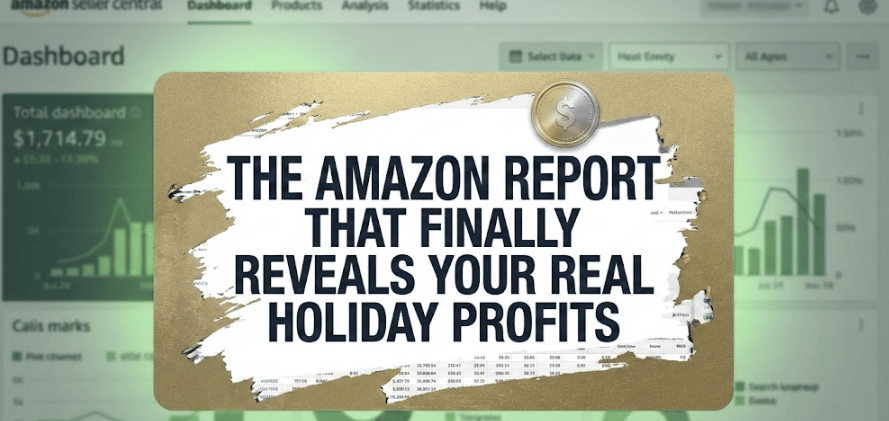
Your December sales look incredible. Your January P&L looks like a disaster.
Here's why: Returns hit weeks after the sale, completely distorting your Q4 performance.
That "profitable" holiday quarter? You won't know the truth until March. By then, you've already made bad inventory decisions based on fake numbers.
Amazon sellers are losing thousands because traditional accounting tracks returns by processing date, not order date.
ConnectBooks just fixed this.
Now you can:
See your actual return rate matched to original order dates
Know your true Q4 profitability before restocking decisions
Stop the "holiday profit illusion" that kills Q1 cash flow
Make inventory and ad decisions on data you can trust
No more guessing. No more nasty surprises in January.
If you're running an Amazon or multichannel store and margins matter, this changes everything.
OpenAI Wants to Buy Pinterest?
Okay, so I was doom-scrolling The Information at 2 AM (yes, I pay for multiple tech publications, no, I don't have a problem, why do you ask?) when I saw this prediction that made me sit bolt upright in bed: OpenAI might buy Pinterest for $17 billion.
Pinterest stock jumped 3% on this SPECULATION. Not an announcement. Not confirmed talks. Just someone saying "yeah, this could happen" and investors collectively went "TAKE MY MONEY." Which honestly tells you everything about how desperate everyone is for OpenAI to finally figure out commerce.
And before you roll your eyes thinking "another tech acquisition, who cares," hear me out—because this isn't about Silicon Valley playing Monopoly with our favorite apps. This is about OpenAI realizing they're trying to build the future of shopping with basically no shopping data. It's like trying to become a master chef when you've never actually tasted food.
The "We Have No Data" Panic at OpenAI HQ
Here's what's genuinely fascinating (and I promise I'm not just saying that because I've spent the last 72 hours obsessively analyzing this): OpenAI has built the most sophisticated AI on the planet, but they're working with the data equivalent of breadcrumbs.
Think about it. Google's Gemini gets fed billions of searches daily—they know what you're looking for before you finish typing. Meta's AI watches you scroll Instagram at 1 AM liking pictures of dogs and overpriced skincare (or is that just me?). Amazon knows you bought toilet paper every 47 days for the last three years and that you have a weakness for Japanese stationery.
OpenAI? They've got... licensing deals with newspapers. Cool. Super helpful for shopping recommendations. "Based on this Wall Street Journal article about interest rates, may I suggest these sneakers?" Not exactly the killer app.
They're out here trying to compete in commerce with ChatGPT while everyone else has actual shopping behavior data. It's like showing up to a knife fight with a really eloquent speech about knives.
Pinterest: The Data Goldmine Nobody Talks About
So Pinterest processes 600 million users doing 80 BILLION visual searches monthly. But here's the thing that made me nearly spit out my coffee: these aren't random searches. Nobody goes on Pinterest and types "existential dread at 3 AM" (that's what Twitter is for).
Pinterest searches are basically purchase intent wearing a trench coat pretending to be inspiration. "Minimalist bedroom ideas" = I'm about to drop $2,000 at West Elm. "Fall wedding guest dresses" = My credit card is already crying. Every single pin is someone broadcasting "I'm thinking about buying this category of thing."
They've got 200 billion pins organized by intent. That's not user-generated content; that's a structured database of human desire. (Wow, that got philosophical. It's been a long week.)
The Part Where I Realized AI Shopping Is Already Weird
OpenAI launched shopping features in ChatGPT last September with something called "Instant Checkout" (powered by the dramatically named "Agentic Commerce Protocol"—someone in marketing was REALLY feeling themselves that day).
You can literally buy stuff without leaving the chat. Which is simultaneously the most convenient and most dystopian thing I've heard this week. OpenAI takes a cut of every sale, because of course they do. They've got a million Shopify merchants integrated, plus Etsy sellers, because apparently ChatGPT is now your crafty aunt who sells jewelry on the side.
But here's the kicker: OpenAI is burning through $5 billion in losses while generating $10 billion in revenue. They need Pinterest's $3 billion advertising business like I need my fourth cup of coffee—desperately and with mounting concern about the consequences.
Why This Completely Changes How We Sell Things Online
If this deal happens (and that's a biggg-sized IF), we're looking at ChatGPT becoming Pinterest with a PhD. Imagine asking "show me sustainable furniture" and getting a visual board PLUS an AI that can actually explain why bamboo is sustainable PLUS the ability to buy it right there. It's like having a personal shopper who actually knows things instead of just pretending to while texting their boyfriend.
For those of us selling online, this creates a fascinating problem. Pinterest searches are 97% unbranded. People search "cozy reading nook" not "IKEA POÄNG chair." This means your weird little brand could theoretically compete with the big players if your product photos don't look like they were taken with a potato in a dungeon.
But—and this is a Dino-sized BUT—you'd need to optimize for:
Pinterest's visual algorithms (which think in shapes and colors)
ChatGPT's language models (which think in words and concepts)
Whatever unholy hybrid they create (which will probably think in ways that make my brain hurt)
The "Satisficing" Thing That's About to Ruin Everything
Okay, I need to talk about something that sounds made up but isn't: "satisficing behavior." (I know, it sounds like something a consultant made up to justify their fee, but stay with me.)
AI assistants don't comparison shop like humans. They find the first "good enough" option and call it a day. They're like that friend who walks into Target needing shampoo and just grabs whatever's at eye level instead of spending 20 minutes reading ingredients like a normal person (me, I'm the normal person, don't @ me).
This completely changes the game. Being the "best" product doesn't matter if you're not the first "adequate" product the AI finds. It's not about winning; it's about being findable and good enough. Which honestly feels like a metaphor for modern life, but I digress.
The Part Where OpenAI Admits They Need Ad Money
Internal documents (which were definitely not supposed to be leaked but here we are) show OpenAI projecting $25 BILLION in "free user monetization" by 2029.
Let me translate that corporate speak: "We're going to show you ads but in a way that feels sophisticated and AI-powered so you don't get mad."
They claim recommendations are "organic and unsponsored" while simultaneously taking transaction fees from merchants. That's like saying you're on a diet while eating ice cream—technically different things, but come on.
Pinterest already has ads. Users expect them. So OpenAI could just point at Pinterest and say "look, they were already doing it!" while sliding ads into ChatGPT like your mom sliding vegetables into your spaghetti sauce.
Why This Might Spectacularly Fail
Pinterest users came for mood boards and DIY tutorials, not to have philosophical conversations with an AI about the nature of throw pillows. (Though honestly, I'd watch that show.)
Combining Pinterest's visual systems with ChatGPT's language models is like trying to teach your cat to bark. Technically possible? Maybe. Natural? Absolutely not. Worth watching? Definitely.
Plus, Pinterest's founders control two-thirds of voting shares, which means this isn't happening unless they REALLY want it to. It's like trying to buy someone's house when they're emotionally attached to the wallpaper their grandmother picked out in 1973.
The Bottom Line: We're All Living in an AI Commerce Simulation Now
Whether this deal happens or not (and let's be real, half of these predictions are just tech journalists throwing spaghetti at the wall), it shows where everything is headed.
AI is going to mediate more and more purchases. Your customers won't visit your website; they'll ask ChatGPT about you. Your product photos won't be for humans; they'll be for algorithms that "see" in ways we don't understand. Your carefully crafted product descriptions will be reduced to data points in a model that makes decisions in microseconds.
Is this progress? Is this dystopian? Is this just Tuesday in 2026? Yes.
The winners will be the ones who figure out how to be legible to both humans and machines. The losers will be anyone still optimizing for Google like it's 2015.
And me? I'll be here at 3 AM, reading acquisition rumors and wondering if Pinterest's algorithm knows I've been saving "home office organization" pins for three years without organizing a single thing.
P.S. - If OpenAI does buy Pinterest, can we please get a feature where ChatGPT roasts my Pinterest boards? "I see you've saved 847 'quick weeknight dinners' but your food delivery history suggests you've made exactly none of them." I'd pay extra for that level of honesty.
P.P.S. - My Pinterest board labeled "future house" has been active since 2018. At this point, it's less aspiration and more archaeological record of my declining faith in the housing market. OpenAI, if you're reading this, your AI better understand that level of millennial despair.
Do You Love The AI For Ecommerce Sellers Newsletter?
You can help us!
Spread the word to your colleagues or friends who you think would benefit from our weekly insights 🙂 Simply forward this issue.
In addition, we are open to sponsorships. We have more than 60,000 subscribers with 75% of our readers based in the US. To get our rate card and more info, email us at [email protected]
The Quick Read:
A “periodic table” of prompting that stacks frameworks from R G C C O V to human-in-the-loop, matching rigor to risk.
US big box retail is reshaping fast with fulfillment-first stores, third-party marketplaces, and retail media moving inventory.
A 2026 prediction that AI brings factory logic to energy, mining, housing, and turns mega-projects into repeatable systems.
AI’s next moat is measurement as companies buy tools blindly and winners prove usage, value, and ROI with hard metrics.
Ahrefs data shows word count doesn’t win AI Overviews, clarity does, with near-zero correlation to citations.
LLM adoption is widening with ChatGPT still leading, Gemini rising, usage shifting to apps, and work use often unofficial.
Manus Design View turns prompting into editing with mark-and-edit visuals, text swaps, and consistent scenes.
Jensen Huang sees AI workers onboarded like staff, turning IT into HR for digital employees.
Tweaks and change to make your ChatGPT more accurate.

The “make it real” image prompt trend favors lo-fi phone photos, imperfections, and flat lighting over polish.
The WEF jobs outlook points to heavy AI-driven churn but net job gains by 2030 and massive retraining demand.
A sharp warning that AI may kill the struggle that builds thinking, making AI-free learning time essential.
An AI marketing lesson showing AI should test and inform, not overpromise, then guide real product redesigns.
Notion is testing an AI-first workspace with dedicated AI areas, edit controls, and usage credits.
ChatGPT ads are being explored, with the risk of monetizing trust without turning answers into ad clutter.
A curated directory of Claude Skills shows how reusable workflows can automate docs, data, code, and content across Claude.ai, Claude Code, and the API for faster, more consistent productivity.
The Tools List:
🌐 Dorik AI - Generate beautiful websites from a single prompt.
🔴 Record Once - Video tutorial creation and auto-editing
🤖 Kittl: Speed up your workflows with AI-powered design tools and gain instant access to a ton of stunning illustrations, fonts, photos, icons, and textures.
🌊 Sune: Designed to help your team collaborate and automate workflows.
📹 Creatify AI - Turn a product URL into a video ad instantly
📅 Howie.ai - Say goodbye to scheduling hassles with advanced AI coordination
About The Writer:

Jo Lambadjieva is an entrepreneur and AI expert in the e-commerce industry. She is the founder and CEO of Amazing Wave, an agency specializing in AI-driven solutions for e-commerce businesses. With over 13 years of experience in digital marketing, agency work, and e-commerce, Joanna has established herself as a thought leader in integrating AI technologies for business growth.
For Team and Agency AI training book an intro call here.