- AI for Ecommerce and Amazon Sellers
- Posts
- How AI turned social media into a casino
How AI turned social media into a casino
Why your posts either get 12 views or 12 million

Jo Lambadjieva
November 28, 2025
In partnership with


Happy Thanksgiving!
To all of our US friends and peeps that celebrate, Happy Thanksgiving! I hope you all had a wonderful celebration yesterday.
I am very grateful for this community. Thank you for all the wonderful messages I receive from you every week with opinions, greets, feedback and kind words. It’s my fuel to keep writing this newsletter.
Jo
From Our Sponsor:
Your competitors are already automating. Here's the data.

Retail and ecommerce teams using AI for customer service are resolving 40-60% more tickets without more staff, cutting cost-per-ticket by 30%+, and handling seasonal spikes 3x faster.
But here's what separates winners from everyone else: they started with the data, not the hype.
Gladly handles the predictable volume, FAQs, routing, returns, order status, while your team focuses on customers who need a human touch. The result? Better experiences. Lower costs. Real competitive advantage. Ready to see what's possible for your business?
The AI Algorithm Apocalypse: How Social Media Just Ghosted Your Follower Count
Okay, we need to talk about something that hit me while doomscrolling at an unreasonable hour. Every social media platform has basically just flipped the entire game board, and most of us are still playing checkers while they've moved on to 4D chess
Remember when having a million followers actually meant something? Yeah, well, the AI overlords at Meta, TikTok, and X just collectively decided that your follower count is about as useful as a chocolate teapot. And honestly? It's both terrifying and kind of fascinating to watch.
The Math That Murdered Your Reach
Here's the thing that made me question everything I thought I knew about social media last week: these platforms are now using weighted probability formulas to decide who sees your content. Not your followers. Not people who actively chose to follow you. Just... whoever the algorithm thinks might engage with it.
Let me paint you a picture of how ridiculous this is. You could have three million followers posting a gorgeous product shot, and some random person with 47 followers posting a video of their cat wearing a tiny hat will absolutely demolish your reach. Why? Because the AI doesn't care about your carefully cultivated audience. It cares about predicted engagement from literally everyone else on the platform.

He wins in the end.
The formula basically works like this: the AI assigns points to different types of engagement (likes, comments, shares, that weird thing where people save posts to never look at again), then multiplies each by the probability that a specific user will do that thing. Your follower count? Not even part of the equation. It's like spending years building a mailing list only to find out the post office decided to randomly redistribute your mail to whoever they think might enjoy it more.
The Two-Lane Highway to Hell (Or Viral Success)
What we're dealing with now is what I'm calling the "feast or famine" distribution model. Your content either reaches approximately nobody or suddenly explodes to millions of views. That comfortable middle ground where your posts consistently reached your actual followers? Dead. Gone. Buried next to MySpace and Google+.
The numbers coming out of the industry are brutal—brands with millions of followers seeing their average post reach drop by over 90% in just months. Years of community building, gorgeous product photography, massive follower counts... none of it matters anymore. Meanwhile, completely random content from unknown creators is pulling tens of millions of views.
(And yes, I absolutely watched all the doorknob videos. They're weirdly compelling. The algorithm knows me too well and I hate it.)
The Serialization Strategy That's Actually Working
Here's where things get genuinely interesting (and I promise this isn't just me trying to justify my TikTok addiction as "market research"). The AI has a massive crush on serialized content. Like, embarrassingly obvious crush.
When someone watches episode one of your "Rating My Customers' Wildest Product Uses" series, the algorithm doesn't just note that single engagement. It starts hunting for other people who might like episode two. Then three. Then seventeen. It's basically creating its own little fan club for your content without you having to do anything except keep making episodes.
The data shows this approach working remarkably well. Furniture companies testing product durability in ridiculous ways, beauty brands doing "will this work for..." series—they're seeing exponential growth from episode to episode. The pattern is clear: Episode 1 might get modest views, but by Episode 12, the numbers can explode into millions. The AI learns who wants to watch and just... keeps finding more of those people.
The Volume Game Nobody Wants to Play (But Everyone Has To)
Remember when we could post once a day and call it good? Laughs in exhausted social media manager
The new reality is that posting is basically buying lottery tickets. The more you post, the more chances you have of the algorithm randomly deciding to bless you with distribution. Some brands are literally posting 10-15 times per day across platforms, treating it like a statistical probability game.
There's this streaming service that's creating 200+ clips per week from their shows. TWO HUNDRED. They're not even trying to predict what will work anymore—they're just throwing everything at the wall and letting the AI sort it out. And the worst part? It's working. They're getting more views than when they carefully crafted three posts per week.
It's exhausting just thinking about it. My content calendar looks like I let a caffeinated squirrel plan it.
The Angry Engagement Trap
Here's something that should terrify every brand manager: the AI literally doesn't care if people hate your content. Anger is engagement. Controversy is engagement. That ratio'd tweet about your product? The algorithm LOVES it.
I watched a beauty brand accidentally create a color that looked terrible on everyone. The backlash was swift and brutal. Comments flooded in about how it made people look "like expired yogurt" (actual quote). The result? Their highest reach in two years. The AI saw all that "engagement" and decided everyone needed to see the expired yogurt lipstick.
This creates an absolutely insane incentive structure. Do you lean into controversy for reach? Do you risk your brand reputation for algorithmic distribution? It's like the platforms built a casino where the only way to win is to occasionally set yourself on fire.
Why Your Competitor's Content Keeps Haunting Your Feed
Ever notice how you check out one competitor's product and suddenly your entire feed becomes an advertisement for them? That's not paranoia—that's the AI learning in real-time.
Every interaction is a signal. Comment on a competitor's post to see what they're up to? Congratulations, the algorithm now thinks you're their biggest fan. Like a post about a product category you sell? Here's 47 more posts about it, none of them yours.
The feedback loop is so aggressive that brands are literally telling their employees not to engage with competitor content from company accounts. It's like we're all playing this weird game of social media hide-and-seek where looking at your competition means the algorithm will make sure they're all your customers see for the next week.
The Resource Allocation Nightmare
Let's talk about the elephant in the room: this all costs money. Like, a lot of money.
Building follower count used to be an investment. Spend money on growth, get reliable reach to those followers, profit. Now? You could have 10 million followers and get less reach than someone's grandma posting blurry photos of her garden.
Instead, we need to invest in:
Content production teams that can pump out volume
Series development that might take weeks to gain traction
Owned channels (email, SMS, Discord, carrier pigeons) that bypass the algorithm entirely
Probably therapy for our social media managers
Small businesses are especially screwed here. The "democratic" algorithm that supposedly gives everyone a fair shot actually requires MORE resources to game effectively. It's democratic in the same way a casino is democratic—sure, anyone can win, but the house always has the edge.
The Arms Race That Never Ends
Here's the really fun part (and by fun I mean soul-crushing): the AI is constantly learning and changing. That brilliant tactic that worked yesterday? The algorithm just adapted to it. Those "wait for it" text overlays that guaranteed views on TikTok? The AI figured out people were gaming the system and started ignoring them.
We're basically in an arms race with a machine learning system that never sleeps, never takes a break, and processes millions of signals per second. It's like playing chess against a computer that changes the rules every time you start winning.
The Strategic Frameworks That Actually Make Sense
After watching dozens of brands navigate this mess, I've seen three approaches that don't completely implode:
The "Tsunami" Approach: Post steady, consistent content and wait for the occasional algorithmic blessing. Works if you have budget for big campaign moments and strong brand awareness already. Basically surfing and waiting for the big wave.
The "Netflix" Approach: Go all-in on serialized content. Develop shows, not posts. Requires serious creative commitment but builds compound returns as the AI learns your audience. Think less "product photos" and more "product reality TV."
The "Spray and Pray" Approach: Maximum volume, maximum chaos. Create so much content that statistically something has to hit. Requires either a large team or a concerning amount of caffeine. Or both.
The Bottom Line for Anyone Trying to Sell Things
Look, I'm not saying the old way was perfect. Building follower count had its own problems—bought followers, engagement pods, the weird economy of Instagram lifestyle influence. But at least we understood the game we were playing.
Now we're in this bizarre new world where the platforms have essentially said, "We'll decide who sees your content, trust us, we're very smart computers." And we just have to... deal with it? While still paying for ads on these same platforms that are actively throttling our organic reach?
The winners in this new landscape won't be the brands with the most followers or even the best products. They'll be the ones who figure out how to make content that makes the algorithm fall in love with them, while simultaneously building escape routes through owned channels for when (not if) the algorithm changes its mind.
The paradox is real: we need to master these AI-driven platforms while also building independence from them. It's like dating someone while actively planning your breakup. Exhausting? Yes. Necessary? Absolutely.
P.S. If you're reading this at 2 AM stress-eating chips while checking your reach metrics, know that you're not alone. We're all just trying to make sense of this algorithmic fever dream together.
P.P.S. Seriously though, start building that email list. The robots can't hurt you there. Yet.
Do You Love The AI For Ecommerce Sellers Newsletter?
You can help us!
Spread the word to your colleagues or friends who you think would benefit from our weekly insights 🙂 Simply forward this issue.
In addition, we are open to sponsorships. We have more than 55,000 subscribers with 75% of our readers based in the US. To get our rate card and more info, email us at [email protected]
The Quick Read:
New research shows discounts, loyalty points and experiential rewards can actually deepen emotional attachment, but brands still risk training customers to wait for deals.
Google Antigravity debuts an agent first IDE with cross surface control, natural language coding and mission level agent management for developers.
Peter Thiel has dumped his entire Nvidia stake as fears of an AI inflated bubble grow, even as Nvidia keeps posting record breaking revenue.
Meta launches SAM 3D, turning single images into detailed 3D reconstructions and powering features like Marketplace’s View in Room.
Meta’s Vibes AI video feed hits 2 million daily users, with fastest growth in India and Brazil but early drop offs in parts of Southeast Asia.
Klarna says AI replaced hundreds of roles, enabling salary hikes of nearly 60 percent while hinting more job cuts could still come.
OpenAI rolls out group chats in select countries, a viral growth feature many say Meta should have owned first.
A new paper warns AI is reshaping human thought through cognitive offloading, filter bubbles and algorithmic manipulation that erode autonomy.
Marc Andreessen argues ads aren’t going anywhere because they fund global scale and, when well targeted, become part of the content experience.
Today’s Content Spotlight:
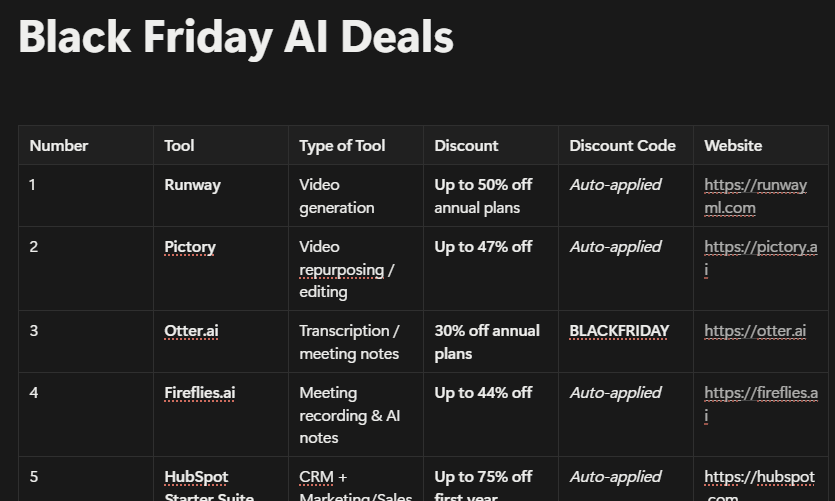
The Tools List:
🚧 Spinach.io: The AI Project Manager that runs meetings, shares notes, and manages tasks in your existing tools.
🔄 BypassGPT - A tool to rewrite AI-generated content for SEO and undetectable by AI detectors.
🩻 Dzine - AI-powered editable image editor
📧 Inbox Zero - Clean Up Your Inbox In Minutes
🤖 Fora - Artificial intelligence designed for the C-suite.
🌊 Shortwave AI Assistant on iOS - Write, search, and analyze your emails with AI on the go.
About The Writer:

Jo Lambadjieva is an entrepreneur and AI expert in the e-commerce industry. She is the founder and CEO of Amazing Wave, an agency specializing in AI-driven solutions for e-commerce businesses. With over 13 years of experience in digital marketing, agency work, and e-commerce, Joanna has established herself as a thought leader in integrating AI technologies for business growth.
For Team and Agency AI training book an intro call here.