- AI for Ecommerce and Amazon Sellers
- Posts
- Guide: Social Media Competitor Analysis with AI
Guide: Social Media Competitor Analysis with AI
A Full SOP inside

Jo Lambadjieva
January 06, 2026

From Our Sponsor:
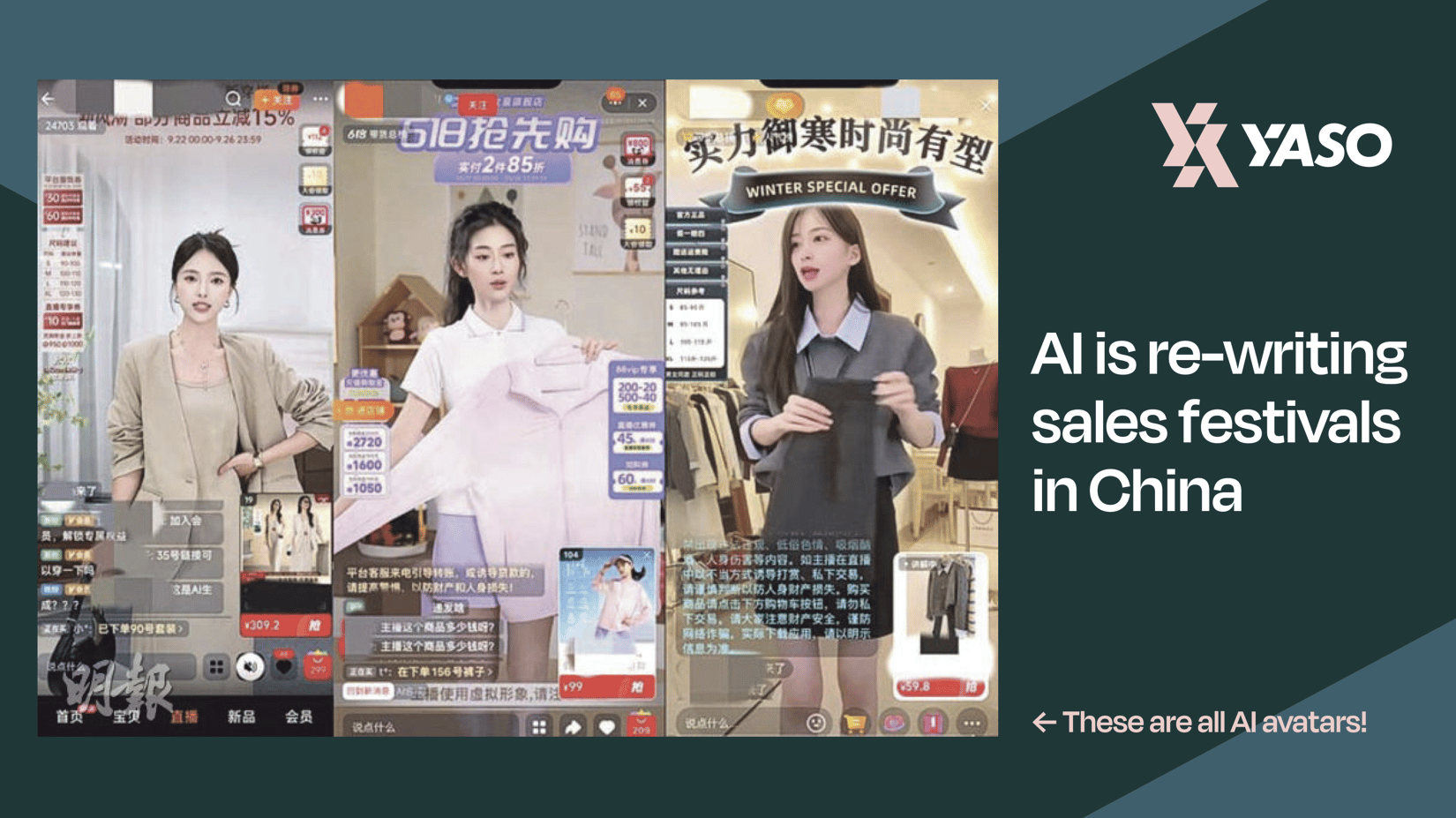
Singles' Day 2025: 2 Billion Products Powered by AI
Double 11 2025 hit $235B in GMV. But the real story? AI became the backbone of China's biggest shopping event.
Traffic distribution, personalised recommendations, and merchant operations were all automated at scale via AI this year. AI product recommendations drove 30%+ conversion growth, serving 1M+ merchants. JD.com’s AI avatar generated $325M in sales at just 1/10th the cost of human hosts.
The AI e-commerce landscape is moving fast, but most Western brands are falling behind.
The AI story behind this year’s Double 11
Top brand strategies for 2026
Platform AI tools
Content strategies that will help you win Chinese customers
This is your chance to ride the AI wave in China.
Guide: Social Media Competitor Analysis with AI
Traditional social media competitor analysis requires 10+ hours of manual work: scrolling through competitor profiles, taking scattered notes, eyeballing engagement metrics, and trying to identify patterns across multiple platforms. The process is tedious, subjective, and often incomplete.
AI tools can compress this entire workflow into a 30-45 minute strategic deep dive. By combining automated data scraping with AI-powered pattern recognition, you can analyze multiple competitors across platforms, extract actionable insights, and identify market opportunities that manual analysis would miss.
This guide walks through the complete seven-step framework for conducting professional competitor analysis using AI.
What You'll Need
AI Tools:
Gemini 3.0 Flash with Deep Research
Gemini for data analysis and strategic insights
Data Collection:
Apify (free tier available for social media scraping)
Optional Enhancement:
Similarweb (free version for traffic validation)
Foreplay.io (for ad creative research)
Step 1: Identify Your Competitors (5 minutes)
The Challenge
Most businesses only analyze obvious competitors they already know about. Your audience follows and engages with brands you've never discovered, including indirect competitors solving the same problem differently and non-competing brands capturing your audience's attention.
Manual vs. AI Approach
Manual method: Google searches, asking colleagues, browsing directories, checking follower overlap (15-30 minutes of scattered research with incomplete results)
AI method: Single prompt delivers categorized competitor list with strategic rationale in under 5 minutes
Process
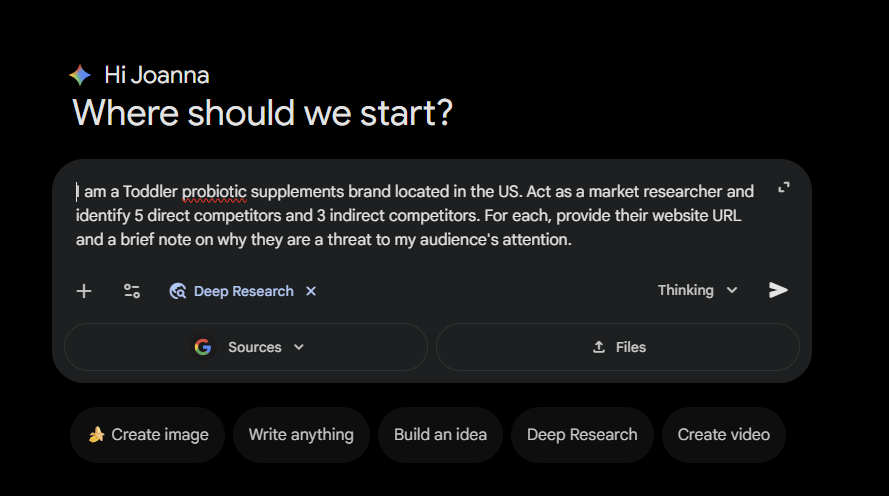
Tool: Gemini Deep Research
Prompt Template:
I am a [Your Business Type] located in [Your City/Region]. Act as a market researcher and identify 5 direct competitors and 3 indirect competitors. For each, provide their website URL and a brief note on why they are a threat to my audience's attention.Example Implementation:
I am a boutique fitness studio specializing in pilates and barre classes located in Austin, Texas. Act as a market researcher and identify 5 direct competitors and 3 indirect competitors. For each, provide their website URL and a brief note on why they are a threat to my audience's attention.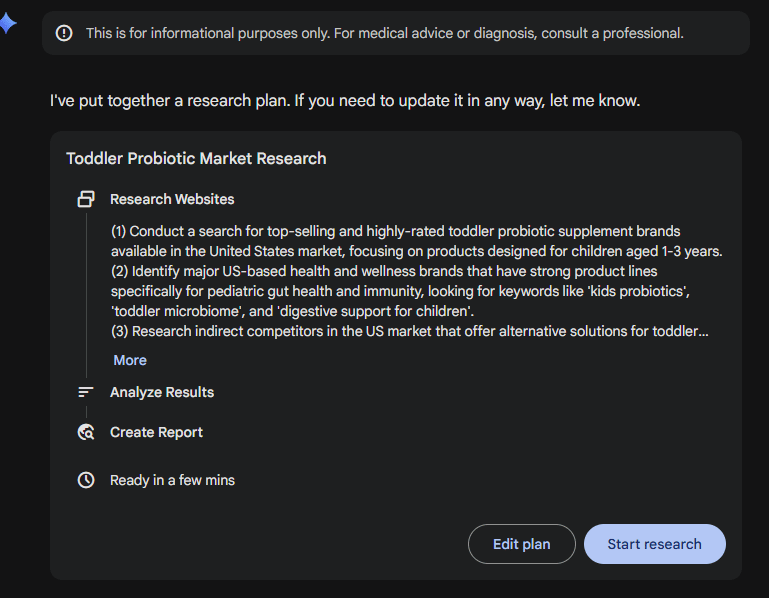
Output
5 direct competitors (same services/products)
3 indirect competitors (different approach, same audience need)
URLs for immediate access
Strategic context explaining why each competitor matters
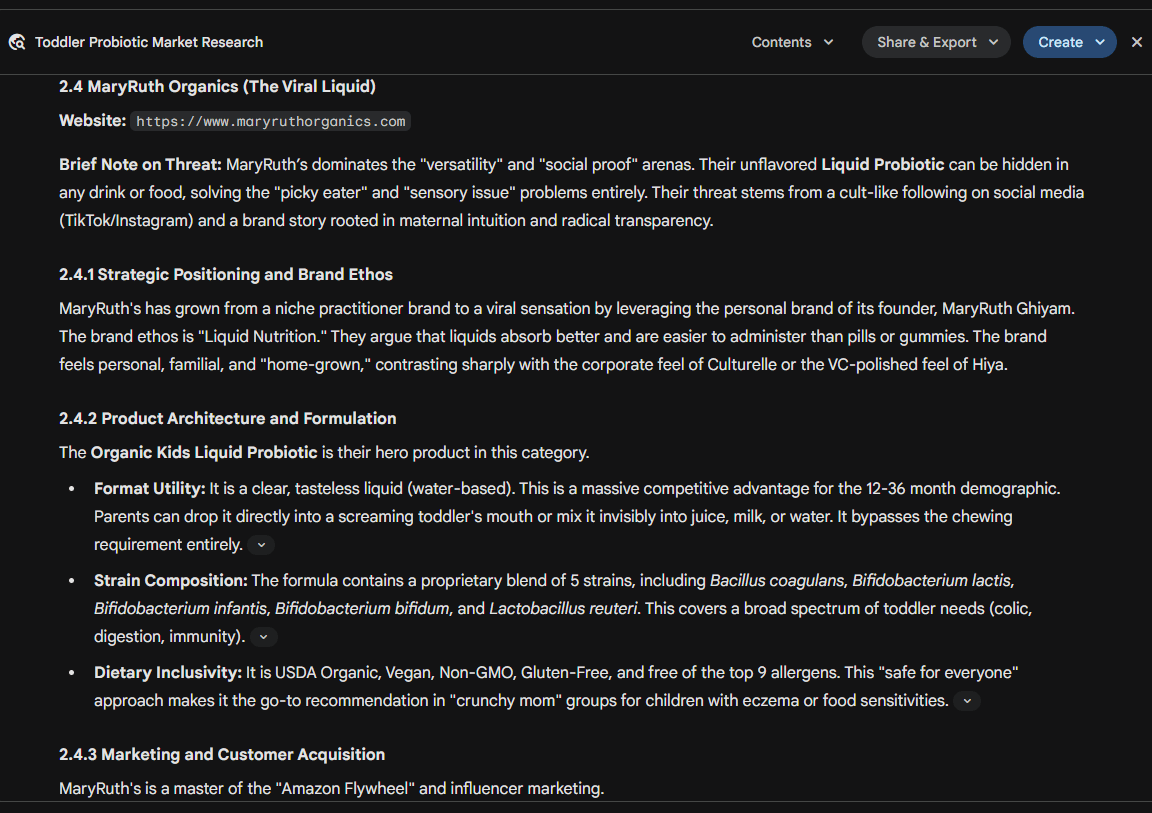
example output from the deep research.
Refinement Tips
Be specific about your niche (avoid generic terms like "fitness")
Include geographic location for local/regional businesses
If results aren't relevant, refine with: "Focus on competitors with similar price points and target demographics"
Step 2: Identify Priority Platforms (3 minutes)
The Challenge
Not every competitor is active on every platform, and not every platform matters for your audience. Analyzing wrong channels wastes hours. You need to identify where competitors invest time AND where they generate traction. A brand might post on LinkedIn, but if engagement concentrates on Instagram, that reveals their true audience location.
Manual vs. AI Approach
Manual method: Searching each competitor on each platform, checking activity, scrolling for post frequency (20-40 minutes of tedious hunting)
AI method: Cross-reference all competitors and identify engagement patterns in under 3 minutes
Process
Tool: Gemini (with optional Similarweb validation)
Prompt:
Based on the competitors found in step 1, which social media platforms (TikTok, Instagram, LinkedIn, Facebook, X) are they most active on, and where is their audience engagement the highest? Summarize this in a table.Optional Validation
For additional confirmation, run 2-3 competitor URLs through Similarweb (free version):
Navigate to similarweb.com
Enter competitor website
Review "Social" section for traffic sources
Output
Table showing:
Platforms each competitor uses
Activity level (high/medium/low posting frequency)
Strongest engagement locations
Platforms you can safely skip
Strategic Application
Focus deep analysis on 2-3 platforms showing high activity AND engagement across competitors
Monitor emerging platforms (TikTok, Threads) if competitors are testing them
Note platforms with activity but no engagement as competitor weaknesses
Step 3: Audit Profile-Level Information (5 minutes per competitor)
The Challenge
Before analyzing individual content, understand how competitors position themselves at first impression. Bio, profile aesthetic, highlights, and pinned posts reveal brand strategy. This overview prevents getting lost in individual post analysis while identifying positioning inconsistencies.
Manual vs. AI Approach
Manual method: Opening profiles, reading bios, studying visuals, taking subjective notes (10-15 minutes per competitor with inconsistent interpretation)
AI method: Screenshot analysis delivers objective brand positioning insights in 2 minutes per profile
Process
Tool: Gemini with image analysis
Action Steps:
Navigate to competitor's social profile
Capture screenshot including:
Profile photo
Bio/description
Link in bio
First 6-9 posts in grid (Instagram)
Highlight covers (if applicable)
Upload screenshot to Gemini
Prompt:
Analyze this profile screenshot. What is their core value proposition? What keywords are they using in their bio? Based on the visuals, what is their 'brand vibe' (e.g., professional, edgy, minimal, playful)? What audience are they trying to attract?Output
For each competitor:
Core value proposition (what they promise)
Key messaging and keywords
Visual brand assessment (color palette, style, consistency)
Target audience indicators
Link/CTA strategy
Overall positioning (expert, approachable, premium, etc.)
Analysis Tips
Complete this for your own profile first for direct comparison
Review Instagram highlight titles—they reveal content priorities
Notice omissions—what they don't say matters as much as what they do
Screenshot at least 2 competitors per platform for pattern recognition
Step 4: Analyze Content Strategy (10 minutes)
The Challenge
Understanding what competitors post, how often, in what formats, covering which topics, and their mix of education vs. entertainment vs. promotion is essential. Manual analysis means scrolling through dozens of posts while trying to remember patterns. AI processes 50-100 posts in seconds and identifies patterns humans would miss.
Manual vs. AI Approach
Manual method: Scrolling feeds, counting post types, noting themes, tracking frequency—becoming a human spreadsheet for 30-60 minutes per competitor
AI method: Scrape all content at once, let AI categorize and analyze patterns in under 10 minutes total
Process Part A: Data Collection
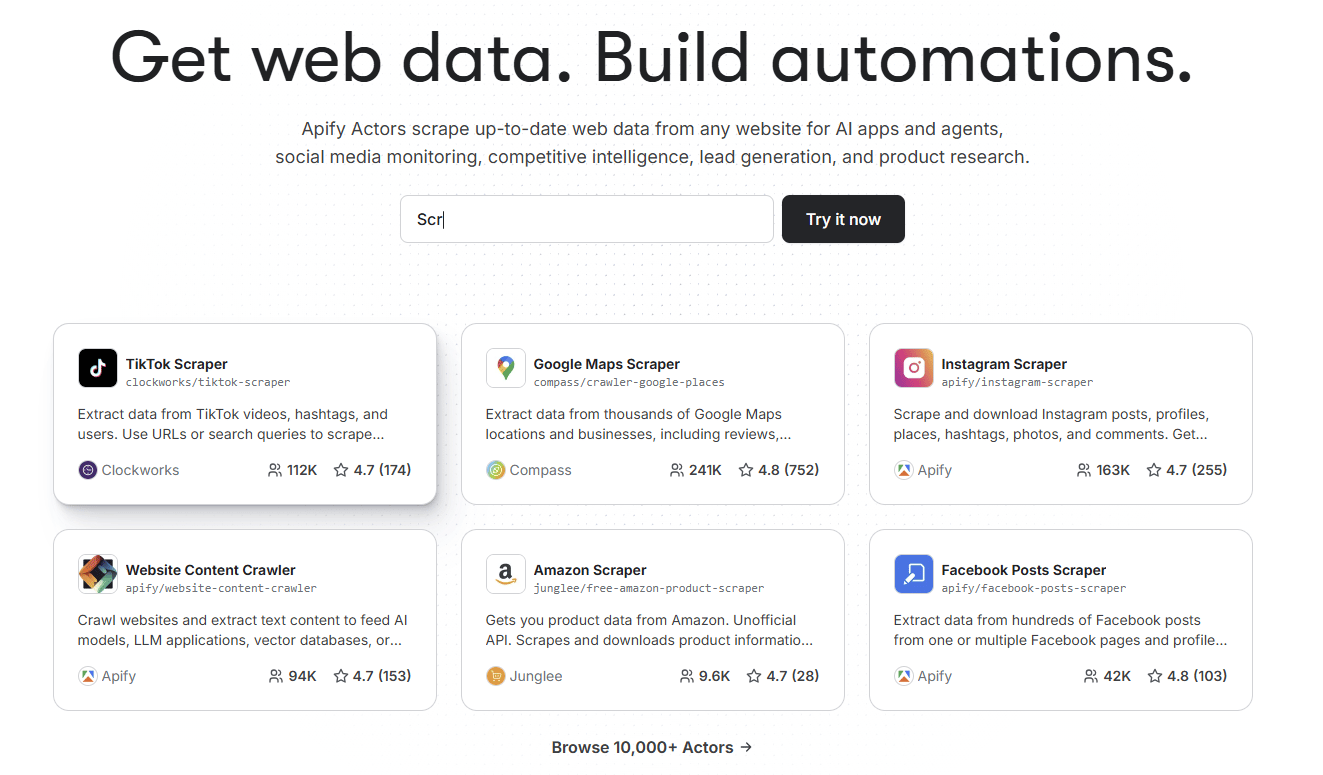
Apify
Tool: Apify (Instagram Scraper, TikTok Scraper, or LinkedIn Scraper)
Steps:
Navigate to apify.com (create free account if needed)
Search for appropriate platform scraper in Apify Store
Select "Try for free"
Paste competitor's profile URL in input field
Set "Maximum items" to 50-100 posts (more data = better insights, longer processing)
Leave other settings as default
Click "Start" and wait 1-3 minutes
Select "Export" and download as CSV or Excel
Data You'll Receive:
Spreadsheet columns including:
Caption/text
Post type (image, video, carousel, Reel)
Likes, comments, shares
Hashtags used
Post date/time
Engagement metrics
Process Part B: AI Analysis
Tool: Gemini
Action: Upload the downloaded CSV file to Gemini
Prompt:
Analyze this spreadsheet of posts. Based on the 'caption' and 'type' columns, create a table showing the percentage of posts that are: 1) Educational, 2) Promotional, 3) Entertainment/Memes, 4) Personal/Behind-the-scenes, 5) User-generated content. Then, summarize their 3 most common 'hooks' used in captions. Finally, note their posting frequency pattern.Output
Content mix breakdown (percentages by type)
Most common caption hooks and opening lines
Most frequently covered topics
Format preferences (carousel vs. Reel vs. static image)
Posting frequency and consistency patterns
Tone of voice assessment
Implementation Tips
If Apify seems complex, start with 20 posts manually copied into a Google Doc, then upload to Gemini
Pay special attention to educational content—this is where brands differentiate
Notice topic omissions—these represent potential content gaps
If competitor posts vary significantly across platforms, scrape each platform separately
As this is a very long guide, here is the rest of the SOP.
Do You Love The AI For Ecommerce Sellers Newsletter?
You can help us!
Spread the word to your colleagues or friends who you think would benefit from our weekly insights 🙂 Simply forward this issue.
In addition, we are open to sponsorships. We have more than 60,000 subscribers with 75% of our readers based in the US. To get our rate card and more info, email us at [email protected]
The Quick Read:
Glossier’s 2025 social was a comeback arc, lo fi GRWM nostalgia with KATSEYE, creator joy that felt native not salesy, and a sensorial world you could almost touch
Google AI Mode is not just a longer AI Overview, it lands on the same answers but pulls wildly different sources, so brands may need two playbooks to win citations and mentions
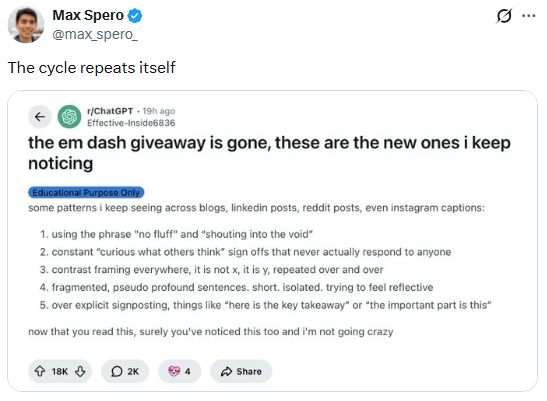
Em dashes might be gone, but the war is far from over!
Want copy edits you can actually trust, prompt ChatGPT to bold every addition and strikethrough every deletion so you can scan changes fast like a real newsroom edit
Pinterest Predicts 2026 points to a vibe rebellion, maximalist individuality, nostalgia remixing, and tastemaking over algorithm sameness, with brands winning by letting people co create
Gemini in Chrome just leveled up research, select multiple tabs and ask for patterns in outlines, hooks, and CTAs, or mine YouTube comments for instant audience insight
The White House is floating an executive order to challenge state AI laws and tie federal grants to a national standard, setting up a messy federal vs state showdown
OpenAI plus Instacart is pushing agentic commerce into ChatGPT, from meal ideas to checkout, with OpenAI taking a small fee, a new monetization lane beyond subscriptions
Stop asking LLMs what they think, treat them like simulators and ask which expert perspectives to channel, you get sharper, less mystical answers and more useful viewpoints
New York just signed the RAISE Act, forcing big AI developers to publish safety protocols and report incidents within 72 hours, with fines up to $1M and more regulation momentum
Shopify Agentic Storefronts aims to make AI chats a new sales channel by piping structured product data into tools like ChatGPT and Copilot, so discovery shifts from links to answers and checkout
NotebookLM added Data Tables that turn messy sources into exportable structured tables for Sheets, great for study guides, meeting action items, or competitor analysis without spreadsheet pain
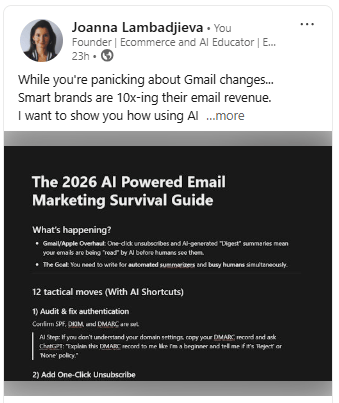
Today’s Content Spotlight:
The Tools List:
👨💼 KPI Builder - Find the KPIs you should care most about as a founder
🎨 Recraft - Design and modify graphics consistently within your brand's style.
🖋️ Voice/Style/Tone AI Prompt Snippet Generator: Craft prompts to replicate any text’s voice/style/tone.
🖌️ LogicBalls: Customize high-quality, engaging content 10x faster.
📊 Reducto - Convert complex docs into LLM ingestible chunks.
🤖 Jan - An open-source chatbot that runs 100% offline on your computer and provides 10x productivity.
About The Writer:

Jo Lambadjieva is an entrepreneur and AI expert in the e-commerce industry. She is the founder and CEO of Amazing Wave, an agency specializing in AI-driven solutions for e-commerce businesses. With over 13 years of experience in digital marketing, agency work, and e-commerce, Joanna has established herself as a thought leader in integrating AI technologies for business growth.
For Team and Agency AI training book an intro call here.