- AI for Ecommerce and Amazon Sellers
- Posts
- Guide: ChatGPT 5.2 for Ecommerce Marketing
Guide: ChatGPT 5.2 for Ecommerce Marketing
Plus new from Adobe & OpenAI

Jo Lambadjieva
December 16, 2025

From Our Sponsor:
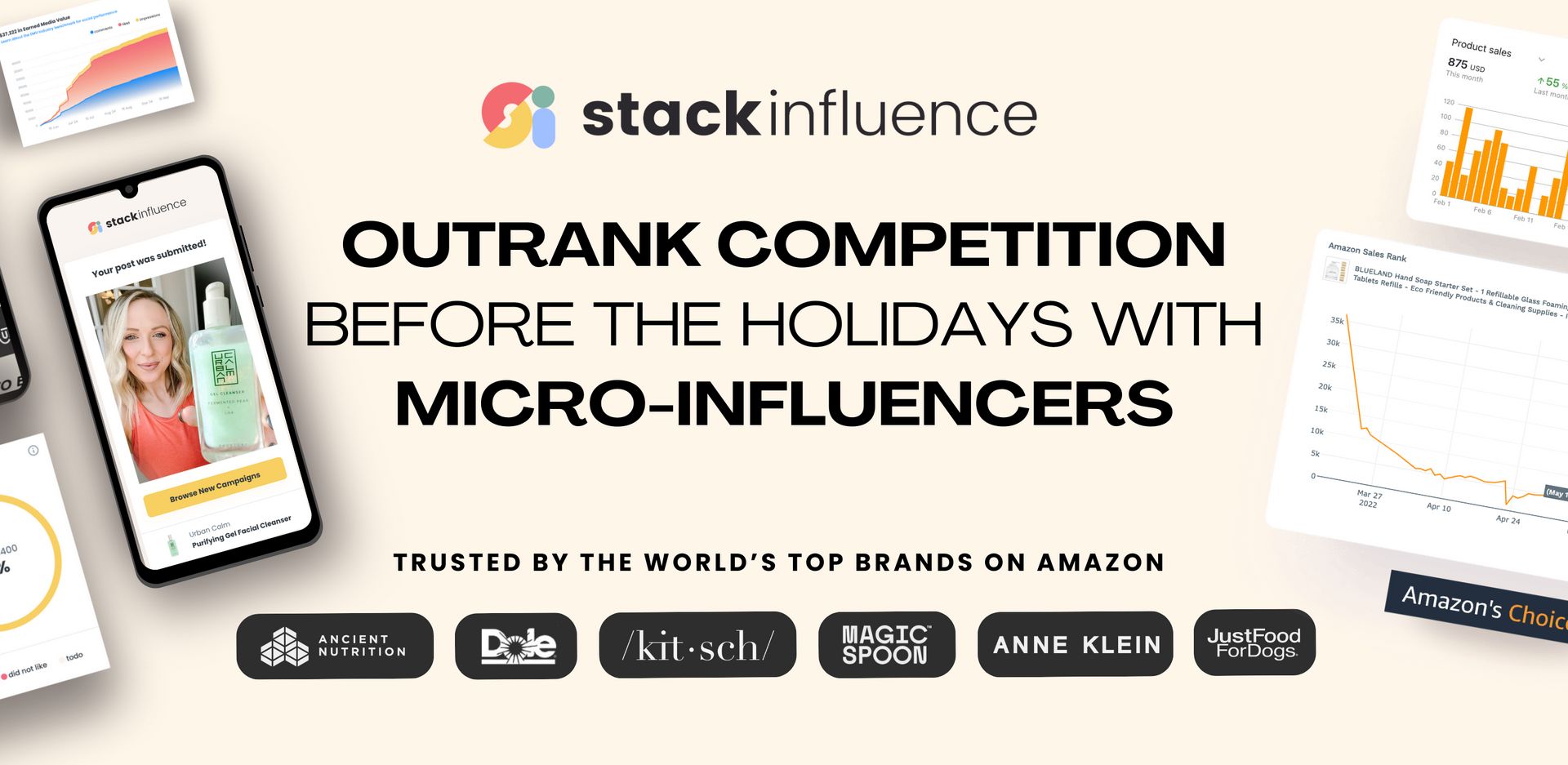
The $0 Marketing Strategy That's Crushing Facebook Ads (1006% ROAS)
A dirty secret from Amazon's top sellers: They're not paying influencers anymore.
While everyone else negotiates $500 creator fees and 20% commission rates, smart brands are getting better results by simply shipping free products.
Lenny & Larry's just proved it works at scale: 1,560 influencers. $0 in fees. 11× sales growth.
Here's why micro-influencers actually prefer products over payment:
No tax headaches
Genuine excitement to share
Building their content portfolio
First access to new products
Stack Influence automates this entire process – from finding the right micro-influencers to tracking every post, review, and conversion.
Guide: ChatGPT 5.2 for Ecommerce Marketing

Understanding ChatGPT 5.2's Core Improvements
ChatGPT 5.1 barely out and now we have ChatGPT 5.2 already 🙂 And so what?
This guide will tell you what’s new, what’s different and how you can use it specifically for ecom and marketing.
Key Performance Gains:
Approximately 50% fewer errors when interpreting charts, dashboards, and screenshots from platforms like Shopify, GA4, or Meta Ads Manager
Substantially improved accuracy when integrating information across long documents (brand guidelines + campaign briefs + product catalogs + customer reviews in single conversation)
Better spreadsheet formatting and financial modeling capabilities
Reduced hallucinations and erroneous responses compared to 5.1
Knowledge updated through late August 2025
The Three-Tier Selection Framework
ChatGPT offers three performance tiers optimized for different task types. Selecting the appropriate tier prevents both wasted time (using Pro for simple edits) and poor results (using Instant for complex analysis).
Instant Tier
Best for: Quick execution tasks requiring minimal reasoning
Use cases: Copy edits, email drafts, product descriptions, social media captions, rewrites, summaries, customer service replies
Speed: Fastest response time
Thinking Tier
Best for: Multi-step reasoning and analytical work
Use cases: Strategy development, forecasting, channel planning, CRO audits, experiment design, data analysis, spreadsheet processing
Speed: Slower but more thorough
Pro Tier
Best for: High-stakes decisions requiring maximum accuracy
Use cases: Major budget allocation decisions, board-level presentations, complex funnel analysis, critical business planning
Speed: Slowest but most comprehensive
Selection Rule: Need speed? Use Instant. Need thinking? Use Thinking. Need perfection? Use Pro.
Side note: Pro is only available for the $200 sub tier.
The 5-Part Prompt Structure
Every effective ChatGPT prompt should include these elements to ensure reliable, usable output.
1. Role: Define who ChatGPT should act as (ecommerce copy lead, performance marketing analyst, growth strategist)
2. Goal: State your specific objective clearly
3. Context: Provide all relevant background information
4. Constraints: Set boundaries including character limits, compliance requirements, style guidelines, budget caps
5. Output Format: Specify exact deliverable structure (table with specific columns, prioritized list, slide outline)
Standard Template
You are my [role].
Goal: [specific objective]
Context: [relevant background]
Constraints: [limitations, style requirements, compliance needs]
Output format: [table/bullets/narrative/specific structure]
Core Ecommerce Workflows
Workflow 1: Product Description Writing
Recommended Tier: Thinking
Use Case: Batch rewriting product detail page copy maintaining brand consistency
Prompt Template:
You're my ecommerce copy lead.
Goal: rewrite PDP copy for the products I paste.
Context: here are my brand voice rules: [paste guidelines]
Constraints: title ≤ 70 characters, 5 bullets max, no "best", no medical claims, [add regional/compliance requirements]
Output: return a table with columns: SKU, Title, Bullet 1–5, Meta title, Meta description, Primary keyword
Quality bar: if something is missing, ask exactly one question per SKU
Why This Works: The table format enables direct import to product management systems. Explicit constraints prevent compliance issues before they occur.
Workflow 2: Paid Media Performance Analysis
Recommended Tier: Thinking
Use Case: Diagnosing what drives campaign performance and identifying optimization opportunities
Prompt Template:
You're my performance marketing analyst.
I'm uploading a search term report and 30-day spend/revenue by campaign.
Do:
- Diagnose what's driving performance (wins + leaks)
- Recommend 5 actions for the next 7 days and 5 for the next 30 days
- Provide a simple budget reallocation plan and explain why
Output: start with a table (Action | Why | Expected impact | Effort | Metric). Then a short summary I can paste to Slack.
Implementation Note: The dual timeframe (7-day quick wins and 30-day strategic moves) creates actionable hierarchy.
Workflow 3: Dashboard Interpretation
Recommended Tier: Thinking
Use Case: Quickly identifying issues from platform screenshots without manual analysis
Prompt Template:
I'm uploading screenshots of my [platform] dashboards.
Identify 3 anomalies or red flags.
For each one: give the likely causes (ranked), the fastest test to confirm, and the metric to watch.
Output as a table.
Use the screenshot as evidence—quote the values you're referencing.
Critical Element: Requesting specific value citations from screenshots prevents hallucinated insights.
Workflow 4: Campaign Planning with Multi-Source Context
Recommended Tier: Thinking (Pro for high-stakes launches)
Use Case: Developing comprehensive campaign strategy using all available context
Prompt Template:
You're my growth strategist.
Inputs in this chat: brand guidelines, last 12 campaigns, top reviews, and 3 competitor examples.
Deliver:
- a 12-week campaign calendar (weekly themes)
- channel plan (Email/SMS/Paid Social/Paid Search/Organic)
- 6 creative briefs (with angles + hooks + proof points)
Constraints: budget cap £X, KPI = [specific metric], [regional] compliance tone
Output: calendar first, then channel plan, then briefs
Why Load All Context: ChatGPT 5.2's improved long-context handling maintains consistency across extensive inputs, preventing the context drift common in earlier versions.
Advanced Data Analysis Workflows
Workflow 5: Performance Change Diagnosis
Recommended Tier: Thinking
Use Case: Understanding what caused period-over-period revenue changes
Prompt Template:
You are my performance marketing analyst.
I'm uploading two CSVs: last 30 days and previous 30 days (campaign/ad set/ad, spend, clicks, purchases, revenue).
Do this:
- Quantify what drove the change in revenue (price/volume/CVR/AOV/traffic)
- Identify the top 5 winners and top 5 losers (with why)
- Recommend 7 actions for the next 7 days (ranked by impact)
Output: a table with columns Finding | Evidence (numbers) | Likely cause | Action | Metric to watch
Quality bar: if attribution is ambiguous, say so and suggest how to validate
Show the numbers you used (at least key calculations) so I can sanity-check.
Key Element: "Show the numbers you used" enables verification and builds trust in AI-generated analysis.
Workflow 6: SKU-Level Profitability Analysis
Recommended Tier: Thinking
Use Case: Determining which products to promote, pause, or reprice
Prompt Template:
I'm uploading an orders export and a product cost sheet (COGS) by SKU.
Build a SKU profitability view: Revenue, Gross margin, Contribution estimate (assume shipping £X, payment fees Y%), Units sold, Return rate (if present).
Then:
- Recommend which SKUs to promote, pause, bundle, or reprice (and why)
- Flag any data issues (missing COGS, SKU mismatches)
Output:
- A summary table (top 20 SKUs by gross margin £)
- A second table (top 20 SKUs by margin %)
- 10 bullet recommendations for merchandising and paid
If the data is messy or columns don't match, tell me exactly what you did to clean it.
Implementation Strategy: Requesting explicit documentation of data cleaning decisions prevents silent errors in analysis.
Common Implementation Mistakes
Vague requests without output format specification → Always define exact deliverable structure
Missing context provided in conversation → Load all relevant documents upfront
No constraints specified → Include character limits, compliance requirements, budget caps
Wrong tier selection → Match task complexity to tier (don't use Instant for analysis)
No validation mechanism → Request calculations and assumptions explicitly
For the Complete Framework
This guide covers essential workflows for immediate implementation. The complete framework includes:
Customer cohort and LTV analysis methodologies
Promotion effectiveness measurement
Creative performance pattern analysis
CRO audit and experiment backlog generation
Advanced visual analysis techniques for complex dashboards
Multi-channel attribution strategies
Custom GPT configuration for team-wide consistency
Do You Love The AI For Ecommerce Sellers Newsletter?
You can help us!
Spread the word to your colleagues or friends who you think would benefit from our weekly insights 🙂 Simply forward this issue.
In addition, we are open to sponsorships. We have more than 60,000 subscribers with 75% of our readers based in the US. To get our rate card and more info, email us at [email protected]
The Quick Read:
How far do LLMs give us a step change in how good a search and recommendation system can be?
Jeff Bezos on the 4 principles that differentiated Amazon from other companies
Claude Projects is a neat way to keep work organised with persistent context, knowledge bases, and custom instructions, so your chats stop resetting and start behaving like a real workflow.
The vibe shift is clear, 2025 was AI experiments, 2026 is intentional systems, better collaboration, smarter measurement, and fewer shiny tools with no strategy behind them.
Gemini 3 Deep Think lands in the Gemini app for Ultra users, pushing tougher math and logic with parallel reasoning and strong benchmark scores aimed at problem solvers, not just chatters.
AI-made product images are supercharging Facebook scam ads this holiday season, with fake storefronts selling knockoffs or nothing at all, so “too cheap” is your loudest red flag.
Chat customization just jumped from 500 to 10,000 characters, meaning you can now build seriously detailed personas that act like a PM, teacher, or researcher on command.
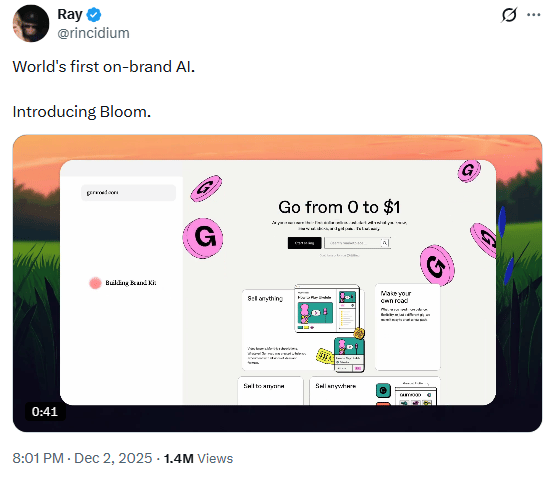
Generate brand assets with Bloom
Copilot is leaving WhatsApp on January 15 due to policy changes, and chats won’t transfer automatically, so export anything important before the switch to Microsoft’s apps or web.
Alexa+ is leaning harder into shopping with a new Echo Show hub, deal tracking, add-to-delivery tweaks, and gift recommendations, turning “where’s my stuff” into a full cart experience.
OpenAI’s next image models, Image-2 and Image-2-mini, are showing up in LM Arena testing with sharper detail and better colour, hinting at a bigger creative upgrade in the pipeline.
Adobe just dropped Photoshop, Express, and Acrobat inside ChatGPT, letting people edit images, design assets, and work PDFs by describing what they want, all without leaving the chat.
The Tools List:
📹 Video interviews by Outset - Conduct user surveys with video and AI.0
📧 Snoooz AI: Send personalized out of office responses and automatically loop in backups on urgent conversations, ensuring nothing slips through the cracks.
🖥️ Stitch: Generate mobile and desktop UIs quickly with AI.
🔌 Zocket - A generative AI model trained with local and global purchase data for the highest level of marketing performance.
⚖️ The calibration game - Get better at identifying hallucinations in LLMs.
⚙️ Strut AI: Quickly capture projects, notes, drafts, and more in collaborative workspaces powered by AI.
About The Writer:

Jo Lambadjieva is an entrepreneur and AI expert in the e-commerce industry. She is the founder and CEO of Amazing Wave, an agency specializing in AI-driven solutions for e-commerce businesses. With over 13 years of experience in digital marketing, agency work, and e-commerce, Joanna has established herself as a thought leader in integrating AI technologies for business growth.
For Team and Agency AI training book an intro call here.