- AI for Ecommerce and Amazon Sellers
- Posts
- Google Just Quietly Killed 90% of the Internet (And Nobody's Talking About It)
Google Just Quietly Killed 90% of the Internet (And Nobody's Talking About It)
Plus new from Google & OpenAi

Jo Lambadjieva
October 17, 2025
In partnership with


From Our Sponsor:
How can AI power your income?

Ready to transform artificial intelligence from a buzzword into your personal revenue generator
HubSpot’s groundbreaking guide "200+ AI-Powered Income Ideas" is your gateway to financial innovation in the digital age.
Inside you'll discover:
A curated collection of 200+ profitable opportunities spanning content creation, e-commerce, gaming, and emerging digital markets—each vetted for real-world potential
Step-by-step implementation guides designed for beginners, making AI accessible regardless of your technical background
Cutting-edge strategies aligned with current market trends, ensuring your ventures stay ahead of the curve
Download your guide today and unlock a future where artificial intelligence powers your success. Your next income stream is waiting.
Google Just Quietly Killed 90% of the Internet (And Nobody's Talking About It)
Okay, we need to talk about what Google just did, because it’s important. Like very, very important.
In September, Google made this tiny little change—they killed something called the &num=100 parameter. I know, I know, it sounds like the most boring technical detail ever. But hear me out, because this seemingly insignificant tweak just fundamentally broke how we find things on the internet, and if you're selling anything online, you should be mildly freaking out right now.
The Thing Google Doesn't Want You to Notice
So here's what happened: For over a decade, there was this neat little trick where you could add "&num=100" to any Google search URL and boom—you'd see 100 results instead of the usual 10. It's like the difference between looking at a menu's appetizers versus seeing the entire kitchen inventory.
SEO tools lived and breathed this feature. They'd grab all 100 results in one go, track where websites ranked, and everyone was happy. Then Google just... turned it off. No warning. No "hey, heads up." Just gone.
The immediate chaos was chef's kiss levels of drama. Rank tracking tools suddenly had to make 10 separate requests to get the same data. It's like if Netflix made you reload the page after every episode instead of auto-playing—technically still functional, but absolutely infuriating.
The Numbers That Made Me Spit Out My Coffee
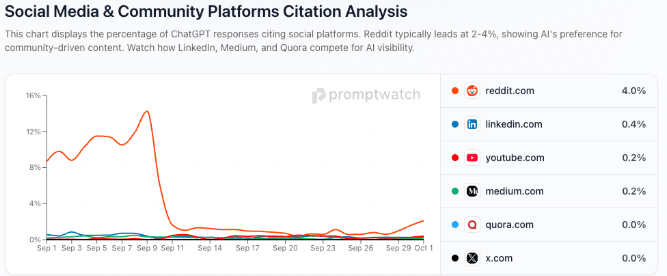
Source: PromptWatch
I've been digging through the data (yes, this is how I spend my weekends now, don't judge), and it's genuinely wild:
87.7% of websites saw their Search Console impressions tank
77.6% lost ranking visibility for keywords they used to track
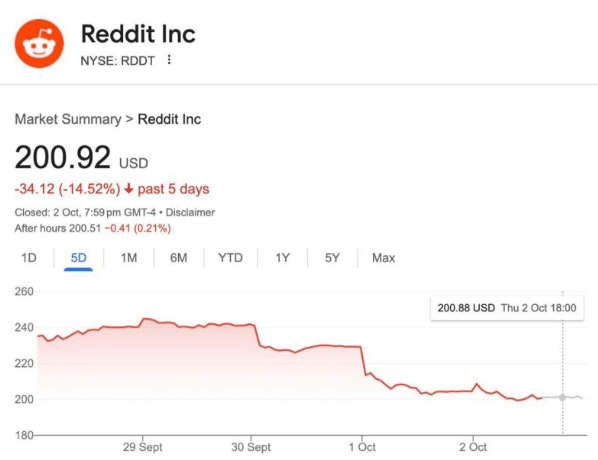
Reddit's market cap dropped $6.5 billion in FIVE DAYS after this change
That last one really gets me. Reddit didn't actually lose traffic. They just became invisible to AI systems that couldn't easily scrape past position 10 anymore. Investors took one look at that and collectively went "nope."
Why This Is Actually About AI Eating Everything
Here's the thing that's keeping me up at night (besides my usual existential dread about whether AI is going to take over): This isn't really about search rankings. It's about AI.
ChatGPT, Claude, Perplexity—all these AI answer engines that we're increasingly using instead of Google? They rely on being able to see search results to know what information exists. By cutting off access to results 11-100, Google just made 90% of the internet effectively invisible to AI systems.
Think about that for a second. We're rapidly moving toward a world where AI assistants are our primary way of finding information, and Google just made sure those assistants can only see the tip of the iceberg.
The Zero-Click Apocalypse Nobody Saw Coming
Remember when we used to actually click on search results? Yeah, me neither. These days, Google just gives you the answer right there at the top—they call them "AI Overviews" because apparently "we're keeping all the traffic for ourselves" was too on the nose.
The brutal math: If you're not in the top 10 results, you basically don't exist. But wait, it gets worse! Even if you ARE in the top 10, if you're not structured in a way that AI can easily digest and regurgitate, you still don't exist.
The New Game: Generative Engine Optimization (Kill Me Now)
So now we have this new (well, since 2023) acronym floating around: GEO, or Generative Engine Optimization. It's SEO's cooler, more demanding younger sibling who went to MIT and won't shut up about machine learning.
Instead of stuffing keywords like we're making SEO turkey, we now have to structure our content like we're teaching a very smart but very literal five-year-old. Clear headings, structured data, FAQ sections—basically, we're creating Cliffs Notes for robots.
The absurdity isn't lost on me. We're optimizing content not for humans who might buy our stuff, but for AI systems that will summarize our content so humans never have to visit our sites. It's like training your replacement, except your replacement is a language model that doesn't need coffee breaks.
What This Means for Anyone Selling Stuff Online
If you're running an e-commerce business, here's your new reality:
The Long Tail Is Dead: Remember that strategy where you'd rank for 500 variations of "blue widget for left-handed people"? Yeah, that's over. If those keywords put you anywhere past position 20, you might as well be on page 50.
Featured Snippets Are Everything: You know those boxes at the top of Google that answer questions? That's your new homepage. If AI systems aren't pulling your content for those, you're invisible.
Structure Is Your New Best Friend: Your product pages need to be formatted like a Wikipedia entry had a baby with an instruction manual. Clear sections, proper markup, FAQ schemas—the whole nine yards.
Amazon Sellers, You're Not Safe Either: Sure, Amazon search is its own beast, but where do people research before they buy? Google. And if your brand isn't showing up in those AI summaries during the research phase, you're losing the war before the battle even starts.
The Bottom Line That's Making Me Rethink Everything
Google's parameter change isn't just some technical hiccup—it's a preview of our dystopian future where discovery happens through an increasingly narrow funnel controlled by a handful of tech giants.
The internet isn't dying, but it's definitely getting a lot smaller. We're watching the web compress from millions of accessible pages down to maybe 10-20 results that actually matter for any given query. Everything else might as well not exist.
For those of us trying to sell things online, the message is brutally clear: You're either in the top 10 with perfect AI-readable formatting, or you're nowhere. The middle ground has been vaporized.
The scariest part? This is probably just the beginning. As AI systems become the primary way we interact with information, whoever controls what those systems can see essentially controls the entire digital economy.
And right now, that's looking like a very small club that we're definitely not invited to.
P.S. - If you made it this far, congrats on your attention span. Mine died somewhere around 2019, but I'm told it's making a comeback.
Do You Love The AI For Ecommerce Sellers Newsletter?
You can help us!
Spread the word to your colleagues or friends who you think would benefit from our weekly insights 🙂 Simply forward this issue.
In addition, we are open to sponsorships. We have more than 50,000 subscribers with 75% of our readers based in the US. To get our rate card and more info, email us at [email protected]
The Quick Read:
Google ships Gemini 2.5 Computer Use, a low latency UI agent that clicks and types across the web to finish tasks, with guardrails and strong benchmark wins.
OpenAI Instant Checkout opens to any site via Agentic Commerce Protocol, feeding structured product data so ChatGPT can find SKUs, manage variants, and complete secure buys.
Sam Altman joins a16z to unpack OpenAI’s vision, Sora’s release, AGI progress, model evals, and what it takes to lead the world’s most valuable startup into the next era of AI.
The AI bubble is happening right in front of us;
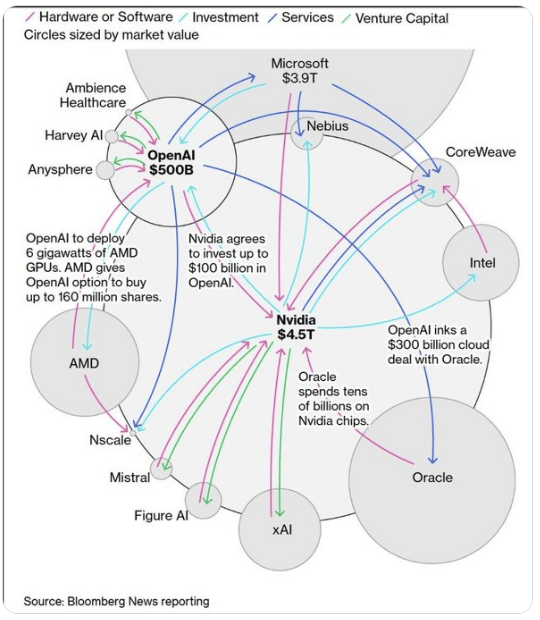
In AI search, brand mentions rival backlinks. Audit and grow accurate mentions to shape how models describe you and lift visibility.
Figure 03 arrives as a Helix ready humanoid with sharper vision, tactile hands, wireless charging, and mass manufacturing aimed at real home and workplace tasks.
OpenAI Sora 2 delivers an AI only video feed with physics aware 1080p clips and Cameos, hinting at feeds tuned to each viewer rather than creators.
Sora’s iOS debut beat ChatGPT’s first week, topping the U.S. App Store and nearing 1M installs in under five days despite invite only access.
Google expands AI try on to Australia, Canada, and Japan and adds shoes, letting shoppers see outfits on their own body and share looks as rivals race.
Skip stock photo personas. Interview buyers to capture triggers, goals, barriers, and selection criteria so marketing and sales land faster.
The Tools List:
📊 Sheet Copilot - Run tasks in Google Sheets using AI.
📝 Reconfigured - The analysts' journal for recording findings.
🔎 Needle - Enable AI search across all your data in seconds.
🆘 Azna - Turn ideas into personalized AI copilot apps without coding.
📹 Vidu 2.0 is a new video model with improved subject consistency and three resolution options up to 1080p (demo).
🌐 Outrank finds untapped keywords and automatically publishes daily SEO-optimized blog posts to grow your website's traffic
About The Writer:

Jo Lambadjieva is an entrepreneur and AI expert in the e-commerce industry. She is the founder and CEO of Amazing Wave, an agency specializing in AI-driven solutions for e-commerce businesses. With over 13 years of experience in digital marketing, agency work, and e-commerce, Joanna has established herself as a thought leader in integrating AI technologies for business growth.
For Team and Agency AI training book an intro call here.