- AI for Ecommerce and Amazon Sellers
- Posts
- ChatGPT just killed the 17-tab shopping spiral
ChatGPT just killed the 17-tab shopping spiral
Free users get it. Amazon doesn't. Here's what that means for sellers.

Jo Lambadjieva
November 26, 2025

Don’t Miss This:

I'm delighted to be speaking at this year's ASW26 and I'd love to see you there!
Learn more and register here, with my 20% discount code included: https://invt.io/1ixbji269yl
Do you want to listen to this article as a PODCAST?
Head to Spotify below:
ChatGPT just killed the 17-tab shopping spiral
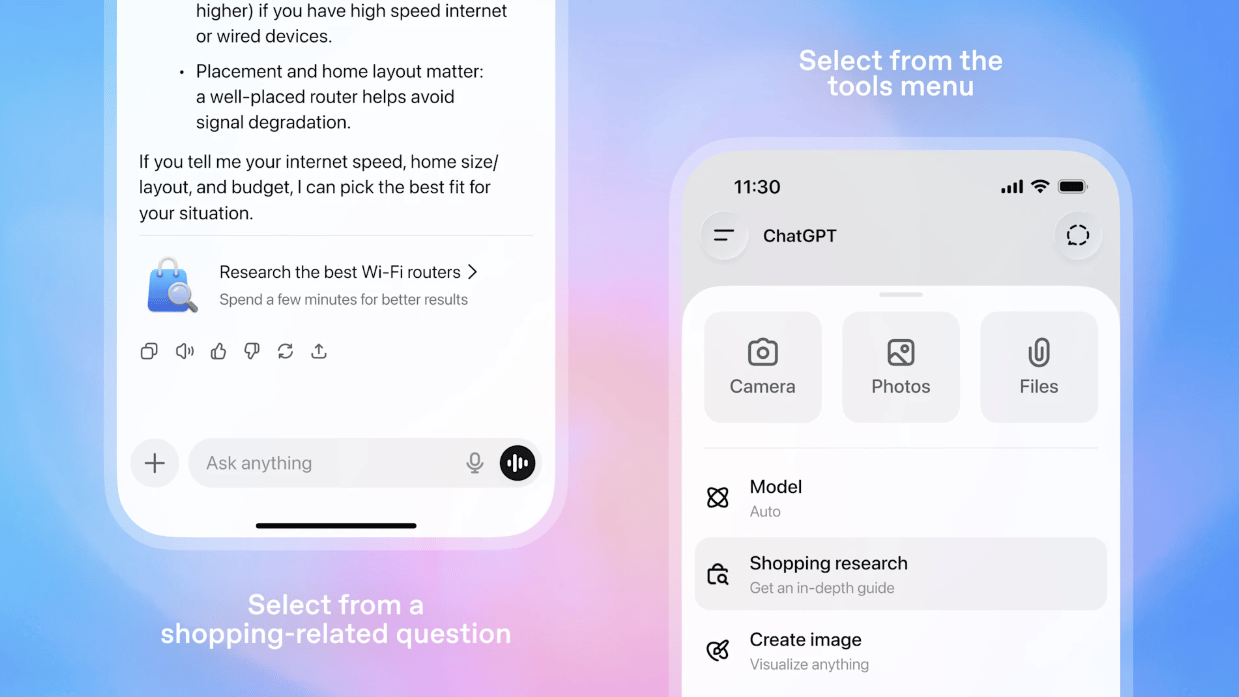
OpenAI just launched a dedicated shopping research feature inside ChatGPT that's available to literally everyone—even free users. And here's what's wild: they're not just slapping shopping onto their existing chatbot. They built a specialized GPT-5 mini variant trained specifically for commerce. It's like they looked at Google Shopping and Amazon and said, "that's cute, but what if we just... didn't need any of that?"
The Part Where I Lose My Mind About Technical Architecture
So here's what's actually happening under the hood. When you ask ChatGPT something like "find me the quietest cordless vacuum for my tiny apartment that won't scare my cat," it automatically routes your query to this shopping-specific model instead of the regular ChatGPT brain.
This isn't just semantic search with a fancy wrapper. The thing actually synthesizes information across multiple sources, asks clarifying questions like a really competent Best Buy employee (remember those?), and generates these visual comparison cards that make me question why I ever spent three hours comparing vacuum specs on seventeen different browser tabs.
But here's the kicker—if you're a paid subscriber with their Pulse feature, this thing proactively generates buying guides based on your conversation history. It's literally anticipating what you might want to buy before you even know you want it. Which is either incredibly helpful or slightly creepy, depending on your perspective (I'm leaning towards helpful, but my therapist says I have boundary issues with AI).
The Amazon Elephant In The Room
Let's talk about what this means for the traditional marketing funnel, which just got absolutely demolished. Remember that whole awareness → consideration → decision journey we all learned about in Marketing 101? Yeah, ChatGPT just compressed that into a single conversation that takes about 45 seconds.
Think about it: instead of starting with a Google search, clicking through to Amazon, reading fake reviews, checking three other sites for price comparisons, going back to read more reviews, getting distracted by TikTok, forgetting what you were looking for, and then impulse-buying something completely different at 1 AM (just me?)—you just... ask ChatGPT. And it does all that research for you.
The really fascinating part is OpenAI's partnerships here. They've got Etsy, Walmart, Target, and a bunch of Shopify stores integrated through their Instant Checkout feature. Notice who's missing from that list? Yeah, Amazon. So if you are selling just on Amazon… you know what that means. Time to get some of the eggs in other baskets.
The "This Actually Works Really Well" Categories vs. The "Don't Even Bother" Categories
After spending an embarrassing amount of time testing this thing, here's what I've figured out about where it shines and where it completely falls on its face.
Where it's genuinely brilliant:
Electronics (it compared laptop specs better than I could after three coffees)
Beauty products (found me a vitamin C serum that doesn't cost more than my rent)
Home appliances (the vacuum search that started this whole obsession)
Anything with clear specifications you can compare
Where it's basically useless:
Fashion (unless you want to look like an AI dressed you, which... no)
Anything you need to touch/feel/smell
Impulse purchases (it kills the vibe by being too logical)
Artisanal/craft items where the whole point is the human story
The system straight-up admits it might hallucinate prices and availability, which is OpenAI's delightfully casual way of saying "sometimes we make sh** up, please double-check before you buy."
The Part Where I Tell You What This Means for Your Business
If you're selling anything online (and if you're reading this newsletter, you probably are), here's what you need to know about this brave new world of AI shopping assistants.
First, your product information needs to be EVERYWHERE and CONSISTENT. ChatGPT's shopping brain synthesizes data from multiple sources, so if your product specs are different on your website versus Amazon versus that random review site from 2019, you're going to have a bad time. The AI doesn't know which version is correct—it just mushes them all together into some Frankenstein description that might not even resemble your actual product.
Second, forget everything you know about SEO keywords. ChatGPT doesn't care about your carefully optimized "best wireless earbuds 2024 waterproof gym" word salad. People are asking questions in full sentences now, like actual humans. "I need earbuds that won't fall out when I'm pretending to jog but actually just walking fast" is the new search query, and your product descriptions better be ready for that level of specificity.
Third, and this is the big one: the traditional distinction between owned, earned, and paid media is completely falling apart. When an AI decides which sources to trust and cite, your expensive Google Ads might matter less than that random blog post from a trusted reviewer. The algorithm isn't looking at who paid the most—it's looking at who it thinks is most credible.
The Visual Search Thing That's Actually Kind of Mind-Blowing
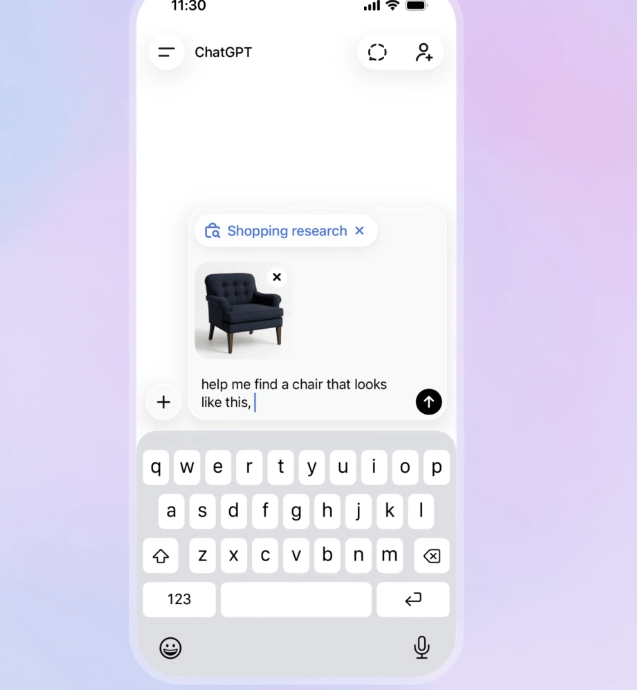
Oh, and they added visual search, because apparently making shopping easier wasn't enough—they had to make it magical. You can literally take a photo of something and ask for similar items within your budget.
I tested this with a picture of my friend's designer bag (which costs more than my monthly rent), and it found me three "inspired by" options under $100 that honestly looked pretty damn good. This is the kind of feature that makes fast fashion executives simultaneously excited and terrified.
The Timing Is Not an Accident
They launched this right before the holidays, and they're offering "nearly unlimited usage" through the shopping season. That's OpenAI basically lighting money on fire to get people hooked on using ChatGPT for shopping. It's the drug dealer "first hit is free" strategy, except instead of drugs, it's AI-powered consumerism (which, let's be honest, might be equally addictive).
What's Still Completely Unclear (And Kind of Concerning)
The whole dual approach thing with both Instant Checkout and individual retailer apps is confusing as hell. Like, if Target has their own ChatGPT app, do Target products get preferential treatment in general shopping queries? Or only when I specifically invoke the Target app? This matters because it's the difference between an open marketplace and a pay-to-play hellscape.
Also, how is this going to work with affiliate commissions? If ChatGPT recommends a product and you buy it, who gets the affiliate fee? OpenAI? The original reviewer whose content got synthesized? The void? (Probably OpenAI, let's be real.)
The Bottom Line: The Robots Are Coming for Amazon's Lunch Money
Look, I've been skeptical of a lot of AI shopping features because most of them are solutions looking for problems. But this ChatGPT shopping assistant actually solves a real problem: shopping online is a fragmented nightmare of tabs, reviews, and comparison paralysis.
What we're seeing isn't just another feature—it's a fundamental reorganization of how people discover and buy products online. The companies that figure out how to optimize for conversational, context-aware AI discovery will thrive. The ones still keyword-stuffing their product descriptions like it's 2015 are about to have a very bad time.
The real question isn't whether AI will change how we shop—that ship has sailed, hit an iceberg, and sunk like the Titanic. The question is whether you're going to adapt your selling strategy for a world where an AI is making purchasing recommendations, or whether you're going to be that person still trying to game the Amazon algorithm while everyone else has moved on to the next thing.
And honestly? After spending a day with this thing, I'm starting to think the AI might actually be better at shopping than I am. Which is either the beginning of a beautiful friendship or the first sign of the robot apocalypse.
I'll let you know which one after I see my credit card bill.
Do You Love The AI For Ecommerce Sellers Newsletter?
You can help us!
Spread the word to your colleagues or friends who you think would benefit from our weekly insights 🙂 Simply forward this issue.
In addition, we are open to sponsorships. We have more than 55,000 subscribers with 75% of our readers based in the US. To get our rate card and more info, email us at [email protected]
The Quick Read:
New research reveals the perfect text-overlay formula for social videos, showing exactly how size and placement boost clicks across TikTok, Instagram and X.
Social media has shifted to a recommendation feed where followers barely matter, forcing brands to split strategies between reach and community.
Clean, structured, scannable content wins as LLMs and humans prefer pages with sharp definitions, clear stats and simple headings.
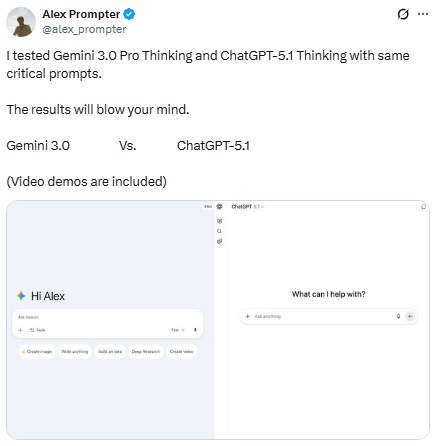
A battle for the ages, who will win?
Microsoft pushes toward “Frontier Firms” with Copilot upgrades, agent mode, Work IQ and enterprise grade agent governance across the whole stack.
AI assisted ads are outperforming traditional production as early testing shows viewers care more about emotion than how the ad was made.
Gemini 3 Pro levels up coding and agentic workflows, letting makers build dashboards, games and landing pages inside Google AI Studio.
ChatGPT is becoming a high intent traffic channel with visitors converting far better than search, pushing brands to optimise for AI citation and mentions.
New data shows ChatGPT citations are 2.3× more likely to include pages with tables, signalling a strong preference for highly structured content.
It’s all in the detail.

GPT never sees full webpages; it works with tiny snippets and sliding windows, meaning structure and clarity matter more than ever for AI visibility.
AI is eating the world across industries as global leaders study the shift, with yearly presentations charting how fast the landscape is transforming.
The Tools List:
🖊️ Permar: Generate a conversion-rate-optimized landing page with a single prompt.
🚀 SnackPrompt - An optimization tool that upgrades your AI workflow with integrations with Bard, Claude, Midjourney, & more.
📊 Anyword AI: Instantly analyze every piece of content you've ever published, so you know which messaging works best on your website, socials, and email channels.
🧾 Kick - Daily bookkeeping for the modern business owner. Minimize your audit risk, and only pay when you save.
🌐 Google Stitch: Redesign and edit your app with a screenshot or URL
About The Writer:

Jo Lambadjieva is an entrepreneur and AI expert in the e-commerce industry. She is the founder and CEO of Amazing Wave, an agency specializing in AI-driven solutions for e-commerce businesses. With over 13 years of experience in digital marketing, agency work, and e-commerce, Joanna has established herself as a thought leader in integrating AI technologies for business growth.
For Team and Agency AI training book an intro call here.