- AI for Ecommerce and Amazon Sellers
- Posts
- Amazon's Alexa Is Having a Main Character Moment
Amazon's Alexa Is Having a Main Character Moment
(And Your Living Room Is the Stage)

Jo Lambadjieva
December 26, 2025
In partnership with


From Our Sponsor:
The Future of AI in Marketing. Your Shortcut to Smarter, Faster Marketing.

Unlock a focused set of AI strategies built to streamline your work and maximize impact. This guide delivers the practical tactics and tools marketers need to start seeing results right away:
7 high-impact AI strategies to accelerate your marketing performance
Practical use cases for content creation, lead gen, and personalization
Expert insights into how top marketers are using AI today
A framework to evaluate and implement AI tools efficiently
Stay ahead of the curve with these top strategies AI helped develop for marketers, built for real-world results.
Amazon's Alexa Is Having a Main Character Moment (And Your Living Room Is the Stage)
Source: Amazon
So here I am on Boxing Day, absolutely destroying the leftover cookies while reading about Amazon's latest Alexa moves, and I can't shake this feeling that we're watching something genuinely weird unfold. Not weird-bad, necessarily. Just... weird-significant.
Amazon just turned Alexa into a website. Yes, you read that right. After nearly a decade of being that cylinder thing on your counter that occasionally understands you want to set a timer, Alexa now lives at Alexa.com where you can check your conversation history like it's Gmail circa 2004.
But that's just the appetizer to this commerce feast Amazon's serving up.
The "We're Everywhere Now" Play
Here's what Amazon's actually doing while we're all recovering from yesterday's festivities: They're transforming Alexa from a voice assistant into what I can only describe as the commercial nervous system of your entire house.
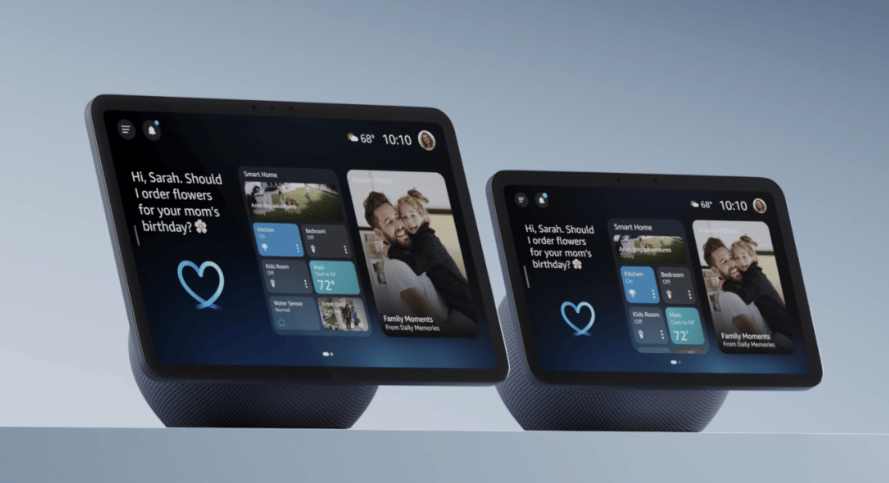
The Echo Show devices now display your shopping lists, track your deliveries, and—this is the kicker—let you add items to orders that haven't left the warehouse yet. Picture this: It's 11 PM, you're scrolling through your Echo Show, and you realize you forgot to add dental floss to that order shipping tomorrow morning. Boom, added. No phone needed, no laptop required, just you and the glowing rectangle that's slowly learning everything about your consumption patterns.
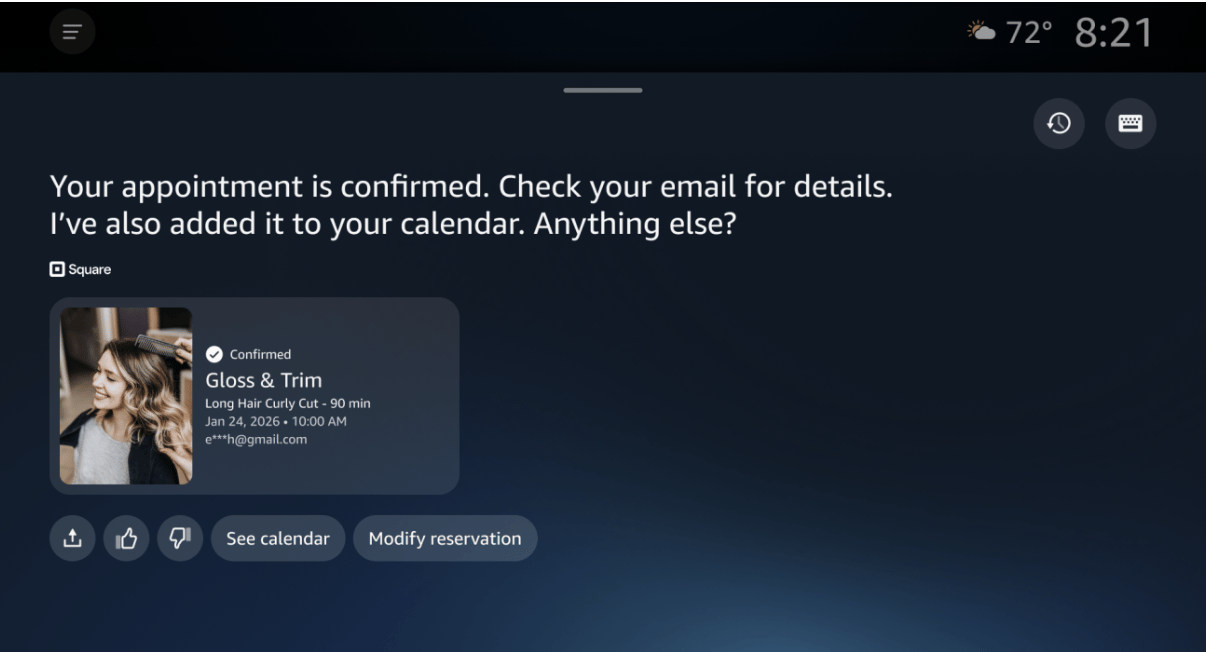
They've also partnered with Expedia, Yelp, Angi, and Square to handle service bookings. So now Alexa can book your vacation, find you a plumber, and schedule your haircut. It's giving "personal assistant who never sleeps and knows uncomfortably much about your life."
The crazy part? Amazon says "tens of millions" of people are using this enhanced Alexa+ experience. Though they also admit some people are downgrading back to regular Alexa, which... honestly, relatable. Sometimes you just want your smart speaker to be dumb enough not to judge your 2 AM purchase history.
The Data Game Nobody Wants to Talk About
Okay, let's get uncomfortable for a minute. What Amazon's really building here isn't just a shopping assistant—it's a continuous behavioral surveillance system that makes traditional web tracking look like a kid with binoculars.
Think about it: When you shop on Amazon.com, they know what you browse and buy. But with Alexa ambient in your home, they potentially know:
The fight you had with your partner about the budget last Tuesday
Your kid mentioning they want that specific LEGO set (three months before their birthday)
That offhand comment about maybe renovating the bathroom
Every single time you've said "we should really get around to fixing that"
This isn't discrete shopping sessions anymore. This is Amazon inserting itself into the pre-shopping consciousness of your household. They're not tracking purchases; they're tracking the conversations that lead to purchases. That's a fundamentally different data game.
And here's where it gets properly Black Mirror-esque: The system now lets you tell Alexa to monitor prices and automatically buy things when they hit your target. So Alexa's not just listening to your consumption desires—it's executing on them autonomously. Your house is literally buying things while you sleep.
Why Voice Commerce Still Feels Like Yelling Into the Void
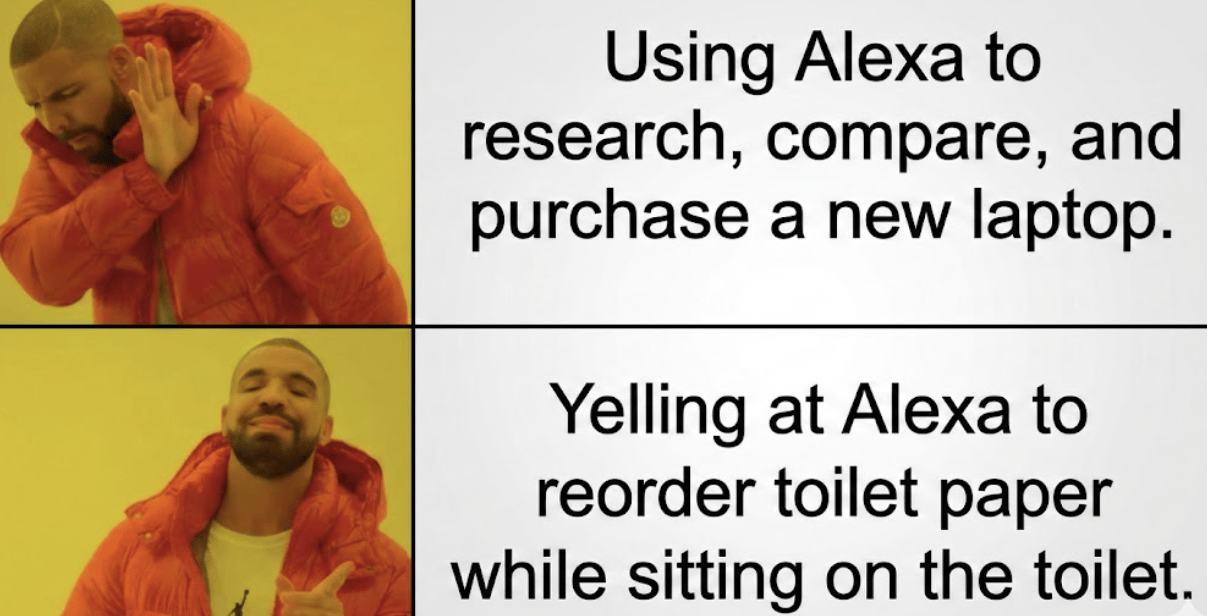
Despite all this infrastructure building, here's a stat that should make Jeff Bezos cry into his rocket fuel: Only about 2% of Echo owners actually buy stuff through voice commands. TWO PERCENT. After years of optimization, millions of devices, and who knows how many engineering hours.
The problem is obvious to anyone who's ever tried to buy something complex through voice. Imagine this scenario:
You: "Alexa, I need a laptop"
Alexa: "I found several options. The first is—"
You: "Wait, does it have good battery life?"
Alexa: "The battery life is—"
You: "But what about the graphics card?"
Alexa: "The graphics specifications—"
You: [Gives up and opens laptop like a normal person]
Voice works great for reordering toilet paper. It's absolute garbage for anything that requires actual consideration. Which is why Amazon's pivoting to visual interfaces on Echo Show while keeping the voice layer. They're basically admitting that pure voice commerce was a beautiful dream that crashed into the reality of how humans actually shop.
The Ambient Commerce Endgame
What Amazon's building isn't really about voice shopping at all. It's about becoming the operating system for household consumption. They want Alexa to be the layer between your intentions and every commercial transaction in your life.
The web portal makes this obvious. Start a shopping list on your Echo in the kitchen, add to it from your phone during lunch, check it on your computer after work, then have your Echo Show display it while you're cooking dinner. It's not about any single interaction—it's about being perpetually present in your commercial decision-making process.
This is fundamentally different from how Google, Apple, or Meta approach AI assistants. Google wants to organize information. Apple wants to protect your privacy while being occasionally helpful. Meta wants to... honestly, I'm still not sure what Meta wants, but it probably involves the metaverse somehow.
Amazon just wants to sell you stuff. And they're building an AI that's exceptionally good at knowing what stuff you need before you know you need it.
The Service Economy Power Grab
Source: Amazon
The Expedia/Yelp/Angi/Square integrations reveal something important: Amazon realizes that physical products are just one slice of the consumption pie. Services—travel, home repair, personal care—represent massive spending categories that Amazon historically couldn't touch.
But here's the thing about services: they're way messier than shipping you a package. When Alexa connects you to a plumber through Angi, and that plumber shows up three hours late and does a terrible job, who do you blame? Alexa? Angi? The plumber? This ambiguity could backfire spectacularly if not managed carefully.
Amazon's essentially betting they can abstract away the messiness of service delivery behind conversational convenience. Whether that works depends entirely on execution quality from companies Amazon doesn't control. It's a risky play, but the potential payoff—becoming the default interface for ALL commerce, not just products—is enormous.
The Privacy Trade-off Nobody's Calculating
As I sit here in my post-Christmas sugar crash, I can't help but wonder if we're sleepwalking into something we'll regret. We're essentially installing corporate listening devices throughout our homes that analyze our conversations for commercial opportunities.
The value proposition is clear: convenience, personalization, never forgetting to reorder essentials. But the cost is letting Amazon's AI systems parse the intimate details of our household discussions. That feels like a trade-off we haven't fully thought through.
And unlike web browsing, which at least maintains the fiction of sessions and cookies you can clear, Alexa's continuous presence makes privacy boundaries basically meaningless. The system is designed to remember everything, connect everything, and use everything to predict what you'll want to buy next.
The Bottom Line
Amazon's Alexa expansion represents the most ambitious attempt yet to embed commerce into the fabric of daily life. It's not about voice shopping anymore—it's about creating an ambient commercial intelligence that knows what your household needs before you start shopping for it.
Whether this succeeds depends less on the technology (which mostly works) and more on whether we're collectively comfortable with this level of commercial surveillance. Are we ready for our homes to have a persistent AI presence that's simultaneously helpful and constantly analyzing our consumption patterns?
As I finish the last of these Boxing Day cookies (Alexa definitely knows I'll need to reorder soon), I can't help but think we're watching the birth of something genuinely new in commerce. Not just another sales channel, but a fundamental shift in how purchasing decisions get made.
The question isn't whether AI will change how we shop—that ship has sailed, hit an iceberg, and is being rebuilt by robots as we speak. The question is whether we want our shopping to become so seamless that we don't even notice it happening.
And honestly? After watching my own shopping habits over the holidays, I'm not sure unconscious commerce is the gift we think it is.
Do You Love The AI For Ecommerce Sellers Newsletter?
You can help us!
Spread the word to your colleagues or friends who you think would benefit from our weekly insights 🙂 Simply forward this issue.
In addition, we are open to sponsorships. We have more than 60,000 subscribers with 75% of our readers based in the US. To get our rate card and more info, email us at [email protected]
The Quick Read:
Nano Banana Pro is exploding with creative use cases, from ultra realistic shots and multi angle scenes to food shaped maps and rock solid character consistency, often stacked with Kling, Grok, and style transfer.
Uber launched Uber Intelligence, a privacy safe insights platform with LiveRamp that blends ride and Eats data with advertiser data to unlock sharper targeting and measurement.
Salvation Army used Gemini and Nano Banana to turn sold out items into hyperlocal fashion ads, driving cheaper store visits and strong in store search intent in just 30 days.
Google Labs unveiled Disco with GenTabs, an AI browser experiment that reads your tabs and builds no code mini apps to help you research, plan, and execute faster.
A free 7 minute mini course breaks down how to build AI video ads that convert, covering research, hooks, keyframes, Kling video, and ElevenLabs voiceovers.
Instagram’s new Your Algorithm tool shows what topics shape your Reels feed and lets you tune them in real time, giving users and creators more control over discovery.
Runway launched its first world model GWM 1 for physics aware simulations, agent training, and avatars, while Gen 4.5 adds native audio and longer multi shot video.
Andrej Karpathy shares a clear beginner friendly breakdown of how LLMs learn from the internet and what that really means for how tools like ChatGPT work.
Corporate storytelling roles are surging as brands hire narrative leaders to cut through AI noise and build trust across content, comms, and executive visibility.
Adobe Firefly now supports prompt based video editing with timelines, camera tweaks, and third party models like FLUX.2, plus temporary unlimited generations.
Photoshop, Express, and Acrobat now work directly inside ChatGPT, letting anyone edit images, design assets, and manage PDFs using simple text prompts.
Google is testing CC, a Gemini powered morning briefing agent that scans your email, calendar, and files to deliver a daily plan and draft actions for the day ahead.
The Tools List:
⚙️ Shot Solve - Instantly solve your problem with GPT-4 vision.
🛒 Openmart - Get highly targeted local business leads using AI.
🤖 Dewstack AI: Effortlessly craft and manage AI-powered docs that elevate your content and empower your users with instant answers.
📞 Trellus - AI sales coach on each and every call.
🌐 Globe Explorer - Visual-hierarchical search on any topic you want.
🖋️ Scribe by Appblit - Readable transcripts with automated sections and headings.
About The Writer:

Jo Lambadjieva is an entrepreneur and AI expert in the e-commerce industry. She is the founder and CEO of Amazing Wave, an agency specializing in AI-driven solutions for e-commerce businesses. With over 13 years of experience in digital marketing, agency work, and e-commerce, Joanna has established herself as a thought leader in integrating AI technologies for business growth.
For Team and Agency AI training book an intro call here.